
Fillies’ Triple Crown Explained
Best Horse Racing Betting Sites – Bet on Horse Racing in 2026
Loading...
Defining the Crown
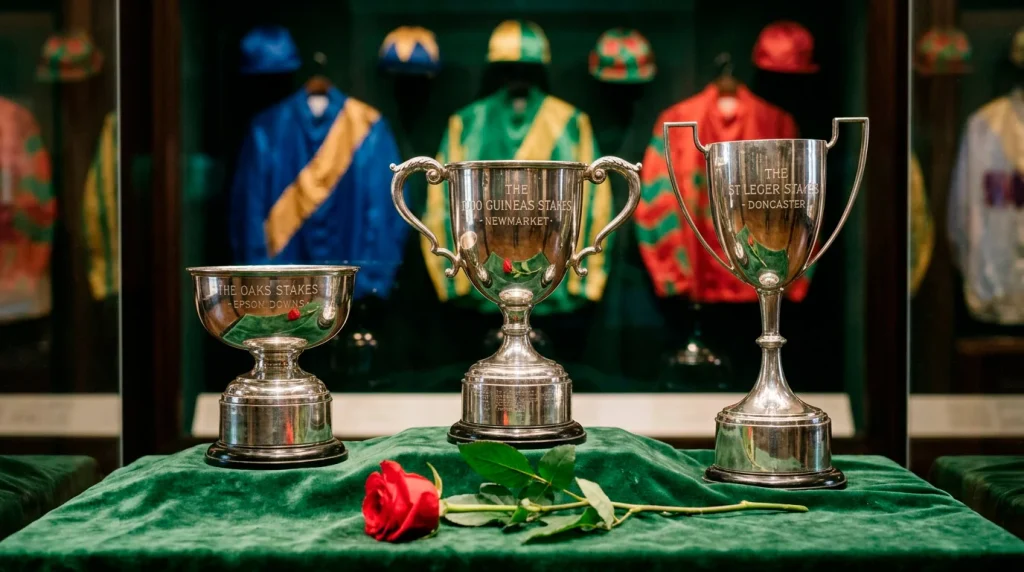
The Fillies’ Triple Crown represents the summit of achievement for three-year-old fillies in British Flat racing. Completing it requires winning three races across a season: the 1000 Guineas at Newmarket, the Oaks at Epsom, and the St Leger at Doncaster. Each leg tests different qualities, and combining victories in all three demands a rare blend of speed, stamina, and sustained excellence through a gruelling campaign.
The achievement is exceptionally rare. Only nine fillies have completed the treble in the history of British racing, a statistic that underlines how difficult it is to find a filly capable of winning over a mile in May, twelve furlongs in June, and nearly fifteen furlongs in September. Most fillies excel at one distance; very few handle the range the Triple Crown demands.
For bettors, the Triple Crown introduces a narrative arc that spans months. Early-season support for a 1000 Guineas winner often inflates her Oaks odds, yet the step up in trip is far from guaranteed. Trainers like Aidan O’Brien, who has won ten of the last eleven Oaks according to HorseRacing.Guide, dominate these discussions because their operations are built to target the Classics in sequence. Identifying which filly might complete the ultimate fillies’ treble is part analysis, part speculation, and entirely compelling.
This guide breaks down the three legs, profiles the historical winners, and explores how punters can approach Triple Crown betting.
The Three Legs Explained
The 1000 Guineas opens the campaign. Run at Newmarket over one mile in early May, it is a pure test of speed and class. The field typically features the best fillies from the previous season’s two-year-old campaigns, many of whom have not yet proven their stamina beyond a mile. Winning the Guineas confirms raw ability but says nothing about a filly’s capacity to handle longer trips. For Triple Crown aspirants, this is the foundation, not the ceiling.
The Oaks follows roughly four weeks later. Held at Epsom on the Friday of Derby weekend, it stretches the distance to twelve furlongs over one of the most demanding tracks in Flat racing. The undulating terrain, the camber through Tattenham Corner, and the uphill finish expose fillies who lack balance or stamina reserves. A Guineas winner stepping up to the Oaks faces questions that cannot be answered until the race is run. Some thrive; others find the trip beyond them.
The St Leger, staged at Doncaster in September, completes the sequence. At a mile and six furlongs plus, it is the longest of the five British Classics and the ultimate examination of staying power. By September, connections must decide whether to pursue the Triple Crown or redirect their filly toward shorter autumn targets. Few take the St Leger route because the demands are severe and the commercial incentives for fillies often lie elsewhere, particularly in breeding.
Each leg filters the field. A filly who wins the Guineas might not stay the Oaks; an Oaks heroine might not retain her form into autumn. Completing all three requires durability, versatility, and the kind of constitution that allows peak performance across four months of championship racing. The rarity of success reflects just how hard it is to combine those qualities in one horse.
Historic Triple Crown Winners
The roll call of Fillies’ Triple Crown winners reads like a history of racing excellence. Only nine fillies have completed the feat, each leaving a mark on the sport that extends beyond their racing careers.
Formosa achieved the treble in 1868, setting the template for future generations. She was followed by Hannah in 1871 and Apology in 1874, establishing an early cluster of winners when the calendar and competition differed markedly from the modern era. La Flèche completed the Crown in 1892, demonstrating that even at that early stage, the feat required exceptional talent.
The twentieth century produced only three winners. Pretty Polly in 1904 remains one of the most celebrated racehorses in history, her dominance extending well beyond the Classics. Sun Chariot won all three legs in 1942, racing through wartime conditions that disrupted the calendar. Meld followed in 1955, trained by Cecil Boyd-Rochfort for Queen Elizabeth II, cementing the achievement’s prestige.
Oh So Sharp stands as the most recent Fillies’ Triple Crown winner, completing the treble in 1985 for trainer Henry Cecil and jockey Steve Cauthen. Her campaign was the last time a filly managed to win all three legs, making her a reference point for every subsequent attempt. More than four decades have passed without another Triple Crown heroine, a gap that speaks to the difficulty of the task and the changing priorities in modern racing.
Several fillies have come close since. Enable, the dual Arc winner, bypassed the St Leger to pursue middle-distance targets on the continent. Other Oaks winners have been retired or redirected before the Doncaster date. The commercial logic of breeding often pulls fillies away from the rigours of a St Leger campaign, reducing the pool of potential challengers. That makes any genuine Triple Crown attempt an event in itself, layered with historical resonance and betting intrigue.
Betting on the Triple Crown
Triple Crown betting markets open early, often before the 1000 Guineas is run. Bookmakers price fillies on their potential to complete all three legs, with odds reflecting both ability and the logistical likelihood that connections will pursue the St Leger. A filly with stamina-laden breeding and a trainer committed to the Classics might trade at shorter odds than a speedier type whose future lies in miling races.
The structure of Triple Crown betting varies. Some bookmakers offer outright markets where you back a filly to win all three races; others treat it as a multiple, requiring you to combine win bets on each leg. The former carries the risk of non-participation — if your filly skips the St Leger, the bet typically voids or loses depending on terms. The latter gives you flexibility but demands three correct selections.
Value often appears after the Guineas. A filly who wins at Newmarket but is unconsidered for the Triple Crown due to perceived stamina limitations might drift in the outright market. If you believe she stays, the odds can be generous. Conversely, a Guineas winner who is immediately installed as Triple Crown favourite may offer thin returns relative to the remaining risk.
Monitor connections’ intentions closely. Trainer statements, entry patterns, and trial race choices all signal whether the St Leger is a genuine target. A filly entered in the Yorkshire Oaks or Irish Oaks but not the St Leger is unlikely to complete the Crown. Reading those signals before the market adjusts is where informed punters gain an edge.
Responsible Gambling
Triple Crown bets span several months and tie up capital for the duration. Factor this into your bankroll planning. The emotional investment in following a filly through three Classics can intensify the urge to increase stakes as the campaign progresses. Maintain discipline and set limits before the season begins. If betting feels like pressure rather than entertainment, step back. Support is available through BeGambleAware and the National Gambling Helpline.