
Epsom Oaks Betting 2026: Odds, Tips and Expert Form Analysis
 Available in US
Complete guide to Oaks betting at Epsom. Compare odds, analyse trial form, and find value in Britain's premier fillies Classic.
Where form meets the camber. Data-driven Oaks analysis.
Start Reading
Epsom Oaks Betting 2026: Odds, Tips and Expert Form Analysis
The Epsom Oaks remains the defining test for three-year-old fillies in Britain. Scheduled for Friday 5 June 2026, this Group 1 Classic unfolds over one mile and four furlongs on arguably the most demanding twelve-furlong track in European racing. For punters, Epsom Oaks betting presents a paradox: a prestigious race with deep liquidity, yet one where favourites routinely stumble and genuine value lurks in the middle of the market.
First run in 1779, the Oaks holds the distinction of being the second-oldest of the five British Classics, trailing only the St Leger by three years. That longevity speaks to its enduring significance. Where colts battle for Derby glory twenty-four hours later, the Oaks serves as the ultimate proving ground for fillies with stamina in their pedigree and the tactical nous to handle Tattenham Corner's notorious left-hand camber. The twelve runners who typically line up each June represent the cream of their generation, carefully selected from trial performances at York, Chester, and Lingfield in the preceding weeks.
Understanding Epsom Oaks betting requires more than scanning morning prices. The race rewards punters who dig into form analysis, study draw bias data, and recognise which trial performances translate to Epsom success. Over the last twelve renewals, only two market leaders have crossed the line first. The average winning starting price sits around 10/1, suggesting that contrarian approaches often pay dividends. Those statistics alone should give pause to anyone tempted to back the favourite without scrutiny.
This guide breaks down every element that shapes Oaks betting in 2026. From the intricacies of draw position to the significance of trial races like the Musidora Stakes, we examine the data points that separate informed wagers from hopeful punts. We analyse how form figures translate to Epsom, compare odds across major bookmakers, and explore betting strategies from each-way value to ante-post speculation. British racing contributes an estimated £4.1 billion annually to the UK economy according to Countryside Alliance briefing data, and the Oaks sits at the apex of that industry as a fixture where public and professional money converge in substantial volume.
Where form meets the camber, as the saying goes at Epsom, preparation matters. The sections that follow provide the analytical framework for approaching Oaks Day with clarity rather than guesswork.
Five Data Points Before You Bet
- Favourites have won just 2 of the last 12 Oaks renewals, making contrarian plays statistically justified.
- The average winning starting price over the past decade hovers around 10/1, with 10 of 12 recent winners returning 5/1 or longer.
- Low draw positions underperform: stalls 1-2 show just 5% strike rate versus 8-9% for middle and high draws.
- Aidan O'Brien and John Gosden have combined to win 10 of the last 11 Oaks, making Ballydoyle and Clarehaven representation essential homework.
- Trial form matters: 20 of the last 23 winners finished first or second in their previous start.
Race Essentials: Date, Distance and Prize Money
The 2026 Epsom Oaks takes place on Friday 5 June, the opening day of the Derby Festival. Post time typically falls in the early afternoon, positioning the race as the centrepiece of Oaks Day before the supporting card concludes. The fixture attracts substantial on-course attendance as part of a two-day meeting that drew significant crowds in 2025, contributing to British racing's overall attendance figure of 5.031 million across the season according to the BHA Racing Report 2025.
| Parameter | Detail |
|---|---|
| Date | Friday 5 June 2026 |
| Distance | 1 mile 4 furlongs (approximately 2,420 metres) |
| Conditions | Group 1, three-year-old fillies only |
| Weight | 9 stone (57 kg) |
| Course | Epsom Downs, left-handed |
| Total Prize Fund | £573,150 |
| Winner's Share | £325,033 |

Prize money for the Oaks has remained competitive within the British Classics calendar. The 2025 edition carried a total purse of £573,150, with the winning connections collecting £325,033 according to bet365 News coverage. That figure sits below the Derby's £1.5 million total but reflects the Oaks' status as a flagship Group 1 for fillies. The Horserace Betting Levy Board allocated £67 million toward prize money across British racing in 2024/25, ensuring that top-tier fixtures maintain purses capable of attracting internationally competitive fields.
The conditions restrict entry to three-year-old fillies carrying a level weight of nine stone. No penalties or allowances apply, creating a straightforward contest where ability and preparation determine the outcome rather than weight differentials. That simplicity appeals to punters: without the complication of handicap marks or weight-for-age adjustments, form analysis focuses purely on which filly has demonstrated the requisite class and stamina to handle Epsom's unique demands.
Comparing Oaks Odds Across Bookmakers
The ante-post Oaks market typically opens several months before June, with prices fluctuating as trial form emerges. By the spring of 2026, a clearer picture develops once fillies complete their prep runs at York, Chester, and Lingfield. Comparing odds across bookmakers becomes particularly valuable for the Oaks given the price differentials that emerge on second and third favourites. Where the market leader might show little variance between firms, outsiders routinely differ by a point or more, creating arbitrage opportunities for shrewd punters.
Major bookmakers offer Best Odds Guaranteed on the Oaks, meaning if you take an early price and the starting price drifts higher, you receive the better return. This guarantee applies to win bets placed on the morning of the race or the day before, though terms vary by operator. BOG effectively removes the timing risk from price-taking, allowing punters to secure attractive odds without fear of missing a drift. Check each bookmaker's specific terms, as some exclude ante-post wagers or impose maximum payout limits.
Non-Runner No Bet is another offer worth seeking on major races. NRNB refunds your stake if your selection fails to reach the starting stalls, whether through injury, travel issues, or trainer decision. Standard betting rules treat non-runners as losing bets, so NRNB provides valuable insurance on ante-post wagers where withdrawal risk remains higher.
The BHA Racing Report 2025 noted that average turnover on Premier fixtures rose by 1.1% compared to the previous year, while Core fixtures saw an 8.1% decline. That split reflects concentrated liquidity on major events like the Oaks, where betting volume remains robust even as overall horse racing turnover faces headwinds. The Oaks attracts enough market activity that odds movements carry informational weight: a sudden shortening suggests professional money or stable confidence, while a drift without obvious cause might indicate concerns only insiders recognise.
Market movers deserve particular attention in the forty-eight hours before the race. Track the Oddschecker comparison page for real-time price updates across all major firms. Significant gambles on Oaks contenders have historically produced winners at notable frequency. When a filly shortens from 20/1 to 10/1 across the board without an obvious form reason, that move often reflects information from the trial grounds that hasn't yet filtered into public analysis. Conversely, drifters can offer false value if the market knows something the casual punter doesn't.
For each-way betting, shop carefully for places. Most bookmakers pay quarter odds for the first three places, but some extend to four places with reduced fractional odds when field sizes exceed expectations. Confirm terms before placing your wager, as the difference between three and four places meaningfully impacts expected value on outsiders.
2026 Runners and Ante-Post Market
The ante-post market for the 2026 Oaks begins taking shape following the previous season's juvenile form, then reshapes dramatically as three-year-old trials unfold. By March, speculative prices exist on fillies who impressed at two, while genuine market formation awaits spring performances. The Musidora Stakes at York, the Lingfield Oaks Trial, and the Cheshire Oaks provide the defining auditions that establish hierarchy in the weeks before Epsom.
Historical data reveals a striking pattern in Oaks results that ante-post speculators should absorb before staking. According to HorseRacing.Guide analysis, 10 of the last 12 winners started at odds of 5/1 or greater. The 2024 winner Ezeliya, trained by Dermot Weld, rewarded each-way backers at 11/1 after a patient ride from Chris Hayes. That result was no aberration but rather confirmation of a recurring theme: the obvious candidates frequently disappoint at Epsom, where the track's demands expose limitations that flatter performances at more conventional courses might mask.
The contenders who merit serious ante-post consideration typically share certain profile characteristics. They've demonstrated stamina for twelve furlongs, or their pedigree suggests they'll improve for the trip. They've handled turns competently rather than racing exclusively on galloping tracks. And they've shown progression through the spring rather than plateauing on juvenile form. Identifying these traits before the market prices them remains the ante-post punter's primary challenge.
Ballydoyle representation demands scrutiny every year. Aidan O'Brien's domination of this race has reached historic proportions: together with John Gosden, these two trainers have produced 10 of the last 11 Oaks winners, a statistic that borders on monopoly. O'Brien himself has now won the race a record 11 times overall according to BloodHorse. While O'Brien typically enters multiple fillies, discerning which one carries stable confidence requires reading between the lines. Jockey bookings offer one clue: the stable's primary rider typically takes the mount on the most fancied runner. Trial placements and rider comments provide additional signals for those willing to analyse press coverage beyond headline form figures.
For 2026, the ante-post market will crystallise rapidly after the 1000 Guineas on 3 May. Fillies who prove their class at Newmarket's straight mile before stepping up in trip represent the traditional Oaks profile, though stamina questions inevitably accompany Guineas performers attempting to extend their range by half a mile. The two-week gap between the Guineas and the Oaks traditionally separates those with genuine middle-distance potential from those whose speed limitations become exposed.
Early prices on unexposed fillies can offer substantial value if the trial season confirms their potential. The key risk in ante-post Oaks betting lies in non-runners: without NRNB protection, a filly who misses the race through injury or disappointing prep runs represents a dead stake. Weigh the price advantage of early commitment against withdrawal risk, and consider limiting ante-post exposure to runners from major stables with the depth to find alternatives if their primary candidate misses engagement.
Form Analysis: Decoding the Oaks Field
Form analysis for the Oaks requires distinguishing between raw speed figures and the progressive profile that Epsom rewards. A filly who posts an impressive Racing Post Rating at Newbury or Doncaster hasn't necessarily demonstrated she can handle the undulations, the camber, and the tactical puzzle that twelve furlongs around Epsom presents. Successful Oaks punters look beyond top-line figures to the manner of victory, the race dynamics, and the evidence that a filly is still improving as she steps into Group 1 company.
The statistics support a disciplined approach to recent form. Oddschecker data indicates that 20 of the last 23 Oaks winners finished first or second in their most recent start before Epsom. That 87% strike rate for recent placed horses tells us something important: the Oaks rarely falls to a filly who stumbled in her prep race, even if excuses existed. Punters should treat any candidate coming off a poor run with considerable scepticism, regardless of prior achievements or trainer excuses about ground conditions or trip deficiencies.
Distance experience matters almost as much as recent form. The same Oddschecker analysis shows that 15 of those 23 winners had previously won at ten furlongs or beyond. While precocious fillies occasionally step up successfully from a mile, the Oaks favours proven stamina. A brilliant Guineas performance doesn't guarantee Oaks success; if anything, pure speed specialists tend to find Epsom's final two furlongs an examination they fail when stamina reserves deplete and the hill takes its toll.
Prioritise fillies who arrive at Epsom having finished in the first two places last time out and who have demonstrated they stay at least ten furlongs. The intersection of these two factors captures the vast majority of recent Oaks winners.
Rating figures from Racing Post and Timeform provide useful benchmarks, but context shapes their interpretation. A 110-rated filly who achieved that figure on heavy ground at Pontefract profiles differently from one who posted the same number on good-to-firm at Sandown. Epsom's unique demands mean that standard assessments of ability require adjustment. Look for fillies whose ratings have progressed through their three-year-old campaign rather than those who peaked at two and have merely reproduced. The progressive profile suggests untapped potential; the regressive one suggests limitations already reached.
Sectional data, where available, offers additional insight into how a filly uses her stamina. Those who finish strongly when rivals weaken indicate genuine middle-distance aptitude. Conversely, fillies who lead early and fade under pressure in the closing stages may struggle with Epsom's rising finish regardless of their headline rating. Timeform's commentary often notes these dynamics, providing qualitative insight that complements quantitative figures.
Trial Races: The Road to Epsom
The Oaks trial races establish form lines and reveal which fillies merit serious consideration. Four principal trials dominate the calendar in the six weeks before Epsom: the 1000 Guineas at Newmarket, the Musidora Stakes at York, the Lingfield Oaks Trial, and the Cheshire Oaks at Chester. Each serves a different purpose in the preparation of potential Oaks candidates, and understanding their respective merits helps punters weigh trial form appropriately.
The 1000 Guineas operates as the most prestigious feeder race despite its shorter distance. The race can act as a direct trial for the Oaks, with Love in 2020 the last filly to complete the double according to bet365 News analysis. The Guineas reveals class at the highest level; fillies who prove competitive at Group 1 standard over a mile often possess the raw ability to handle Oaks company. The question for punters becomes whether that ability translates when stamina reserves matter more than tactical speed.
The Musidora Stakes at York, typically run in mid-May, functions as the principal British trial run at the Oaks distance. Winners of the Musidora arrive at Epsom with proven twelve-furlong form, which removes one uncertainty from the equation. York's galloping track differs substantially from Epsom's undulations, so the Musidora doesn't replicate the physical demands of the Classic. What it does provide is evidence of stamina, willingness to battle, and competitive edge at listed or Group 3 level.
The Lingfield Oaks Trial attracts particular attention because Lingfield's Polytrack circuit descends before rising, somewhat mimicking Epsom's topography. Anapurna completed the Lingfield-Oaks double in 2019, the most recent filly to achieve that feat. The synthetic surface means ground conditions differ from Epsom's turf, limiting direct comparison. Still, punters note that fillies who handle Lingfield's camber and undulations often adapt to Epsom more comfortably than those from flat tracks.
The Cheshire Oaks provides a left-handed, undulating test at Chester that shares characteristics with Epsom's demands. Enable won the Cheshire Oaks before her brilliant 2017 Oaks triumph, demonstrating the race's validity as a prep. Chester's tight turns and pronounced gradients expose fillies who lack balance or adaptability, qualities essential for navigating Tattenham Corner at race pace.
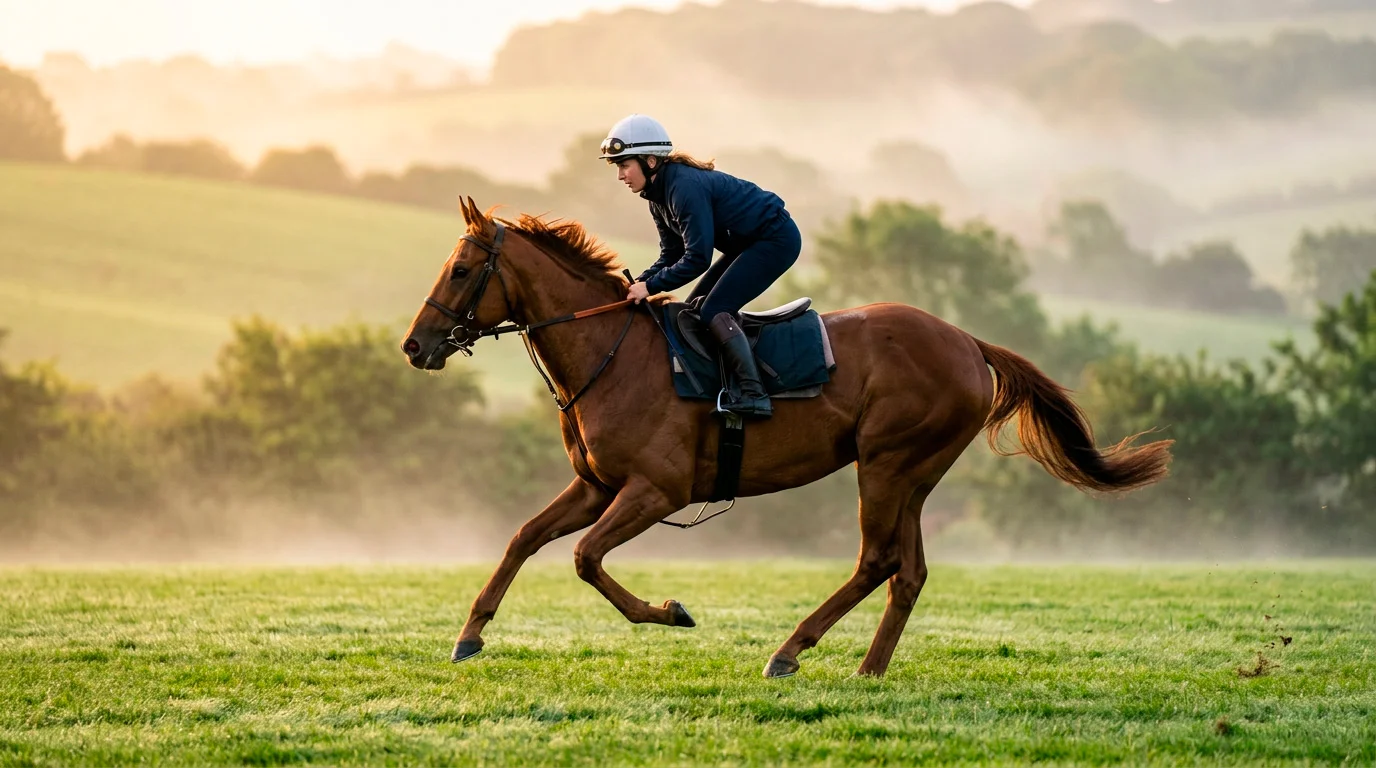
Trial performances matter, but how does a filly's draw position affect her chances once the stalls open at Epsom?
Draw Bias at Epsom 1m4f
Draw position at Epsom carries more weight than at most British racecourses. The unique geometry of the track, where runners descend from the start before rising toward Tattenham Corner and then descending again to the finish, creates dynamics that punish certain stall positions. For Oaks bettors, understanding these biases provides an edge that many casual punters overlook in favour of pure form analysis.
FlatStats analysis of Group 1 races at Epsom's twelve-furlong trip reveals stark disparities. Low stall positions, specifically stalls 1 and 2, produce winners at just a 5% strike rate. Middle and high draws outperform significantly, showing strike rates in the 8-9% range. That difference might seem modest in percentage terms, but when translated to Actual versus Expected performance, the disparity becomes more dramatic. The A/E ratio for low draws stands at 0.58, meaning horses drawn in stalls 1-2 win barely more than half as often as their starting prices would predict.
5% Strike rate for stalls 1-2
8-9% Strike rate for middle and high draws
0.58 A/E ratio for low draws vs market expectation

The mechanism behind this bias relates to the downhill run toward Tattenham Corner. Horses drawn low must hold their position on the inside while runners from wider stalls have room to settle into stride. When the field sweeps left at Tattenham Corner, inside-drawn horses can find themselves caught in traffic, forced wide, or unable to access the racing line that preserves the most ground. These difficulties compound: even a length lost to positioning issues becomes harder to recover when the finish involves climbing Epsom's final rise.
This data supports a disciplined adjustment when assessing candidates. A filly drawn in stall 1 might merit a slight odds drift in your assessment, while one drawn in stalls 8-10 deserves a notch better consideration than pure form suggests. The Derby, run over the same course the following day, shows similar patterns: stall 10 has produced 10 winners since 1967, and 8 of the last 10 Derby victors drew in stall 7 or higher.
"There is undoubtedly an ever-growing desire for data among those consuming and betting on racing," noted Brant Dunshea, CEO of the British Horseracing Authority, in a 2025 interview. "As other sports continue to develop ways in which their fans can gain greater insights through use of real-time data, this is clearly an area in which racing can continue to evolve." Draw statistics represent exactly this kind of analytical edge: information available to those willing to look, but frequently ignored by casual bettors who focus exclusively on form and breeding.
Beyond raw numbers, consider the tactical implications. Jockeys aware of draw disadvantages might overcompensate, using energy early to establish position. That effort can deplete reserves needed for the finish. Alternatively, a rider might accept the draw's limitations and hope for racing luck, a passive approach that depends on scenarios outside their control. Neither response is ideal, which explains why the statistics persistently favour middle and outer draws regardless of the riders involved.
Betting Strategy: Finding Value in the Oaks
Value in Oaks betting emerges from exploiting structural tendencies rather than following the crowd. The statistics outlined earlier bear repeating in practical terms: when favourites win less than 20% of the time, the obvious play becomes the losing play. Successful punters adopt frameworks that account for this reality, focusing on identification rather than confirmation.
Contrarian thinking at Epsom doesn't mean backing outsiders randomly. The successful approach identifies fillies whose chances exceed their market odds, typically those in the 6/1 to 16/1 range who combine proven form with the progressive profile that the track rewards. Eight of the last twelve winners were priced in the top three or four of the betting, so extreme outsiders rarely prevail. The sweet spot sits in the second tier: fillies with genuine credentials overlooked because the market fixates on a shorter-priced rival.
Risk management matters as much as selection. The Oaks represents a single race, and even well-reasoned selections lose more often than they win at typical winning prices. Staking discipline, whether through percentage-based bankroll management or fixed-unit approaches, prevents a losing Oaks bet from disproportionately affecting overall position. Many punters find that each-way betting, ante-post approaches, or exotic wagers like forecasts distribute risk more effectively than lumping on a win single at morning prices.
Each-Way Betting
Each-way betting suits the Oaks market structure particularly well. With typical field sizes of ten to fourteen runners, bookmakers pay quarter odds for fillies finishing in the first three places. That each-way safety net proves valuable when average winning prices sit around 10/1: your selection can miss the winner's enclosure but still return profit if she places.
The mathematics of each-way betting require clear understanding. Your stake divides equally between win and place components. If you bet £10 each-way at 12/1 with quarter-odds place terms, you're staking £10 on the win at 12/1 and £10 on the place at 3/1. A winner returns £130 plus your £20 stake. A placed finish returns £30 plus the £10 place stake, with the £10 win portion lost. That £40 return from a placed 12/1 shot represents a positive outcome despite not finding the winner.
Each-Way Calculation Example
Selection: 12/1 with quarter odds, places 1-2-3
Stake: £10 each-way (£20 total)
If wins: £120 (win) + £30 (place) + £20 stake = £170 returned
If places 2nd or 3rd: £30 (place) + £10 stake = £40 returned
If unplaced: £0 returned
Each-way value increases with price. At 4/1, the place component pays just evens, limiting upside. At 16/1, quarter odds return 4/1 for a place, transforming each-way bets into meaningful profit opportunities even without finding the winner. Given that Oaks winners routinely start at double-digit odds, each-way approaches capture value that straight win bets might miss.
Check bookmaker terms before Oaks Day. Some operators enhance place terms for major races, paying four places instead of three or extending to fifth place with reduced fractions. These enhancements shift expected value calculations meaningfully. A filly finishing fourth under standard terms loses both win and place stakes; under enhanced terms, she might return your place stake and more. Shopping for the best each-way terms represents as valid a value-seeking behaviour as comparing win prices across firms.
Ante-Post Markets
Ante-post betting on the Oaks offers the prospect of superior prices in exchange for accepting withdrawal risk. Bookmakers price uncertainty into ante-post odds: a filly quoted at 8/1 in April might shorten to 5/1 by race week if her trial performances confirm potential. The ante-post punter who backs early captures that value before the market adjusts, provided the selection actually makes it to the starting stalls.
The principal risk with ante-post Oaks betting involves non-runners. Standard ante-post rules treat withdrawn horses as losing bets regardless of the reason for absence. Injury, disappointing trial form, trainer decision, travel complications: none of these provide refund grounds under traditional terms. A filly who shows brilliance in February but suffers a setback in May represents a dead stake despite never contesting the race.
The HBLB Annual Report 2024-25 recorded levy yield reaching £108.9 million in the twelve months to March 2025, the fourth consecutive year of growth and the highest since levy reforms in 2017. That buoyant market indicates active participation across all forms of horse racing betting, including the ante-post speculation that drives early Oaks market formation. Robust liquidity means prices reflect genuine market sentiment rather than thin trading.
Managing ante-post risk requires strategic discipline. Consider limiting ante-post stakes to fillies from major operations with alternatives if the primary candidate misses engagement. Ballydoyle and Newmarket's leading yards maintain depth that reduces non-runner risk: if their first-choice Oaks filly withdraws, stable confidence often transfers to another runner, allowing the ante-post punter to reassess rather than simply absorb a loss. Smaller operations offer less flexibility.
Non-Runner No Bet offers provide ante-post protection at a price. NRNB odds typically sit shorter than standard ante-post prices, reflecting the insurance value embedded in the terms. For risk-averse punters, that premium might be worthwhile. For those comfortable with variance, standard ante-post prices offer better long-term expected value despite the occasional withdrawn stake.
Forecast and Tricast
Forecast and tricast betting amplifies both potential returns and difficulty. A straight forecast requires naming the first two finishers in correct order. A reverse forecast covers both permutations at double the stake. A tricast extends the challenge to the first three in exact sequence. Given the Oaks' tendency to produce results that confound favourites, these exotics can deliver substantial payouts when an outsider fills a principal position.
Computer forecasts calculate dividend after the race based on final market positions of the placed horses. Straight forecasts pay more than combination forecasts, which cost more but cover both arrangements. The unpredictability of Oaks results, where 10/1 winners routinely beat 3/1 favourites, can produce computer straight forecast dividends exceeding £100 to a £1 stake when mid-priced fillies fill the places.
Tricasts offer even greater volatility. Correctly identifying three fillies in exact finishing order represents a low-probability outcome, but the payouts reflect that difficulty. When outsiders fill the frame, tricast dividends can reach four figures. The mathematics favour tricasts as occasional speculative plays rather than regular betting vehicles: the implied probability of success rarely justifies significant staking, but small-stake tricasts add interest and the occasional windfall.
Structuring forecast bets requires price consideration. Combining two short-priced fillies offers lower dividends and higher probability. Pairing a contender with a longer-priced runner increases potential returns at the cost of accuracy. Given the statistics showing favourites underperform at Epsom, forecasts that exclude the market leader and instead combine second-tier choices can represent shrewd approaches, capturing the value that exists in the mid-market while accepting that precision remains elusive.
Betting strategies evolve, but the race itself has remained Britain's premier fillies' test for nearly 250 years.
Oaks History and Track Records
The Oaks has been contested at Epsom since 1779, making it the second-oldest of Britain's five Classic races after the St Leger, which began three years earlier. That 247-year history encompasses transformations in British racing, from the aristocratic sport of the Georgian era through to the modern international competition. Understanding that heritage provides context for why the Oaks commands such prestige in the racing calendar and why victory carries significance beyond prize money alone.
The race takes its name from the estate of the 12th Earl of Derby, who founded both the Oaks and the Derby itself. Originally intended as a minor diversion for the Earl and his friends, the Oaks quickly established itself as the premier test for three-year-old fillies. The inaugural winner, a filly called Bridget, set a template that thousands of successors would follow: prove yourself at Epsom, and your reputation is secured.
The 12th Earl of Derby reportedly won a coin toss to have the premier Classic named after him rather than Sir Charles Bunbury. Had the coin landed differently, we might today discuss the Bunbury and the Bunbury Oaks.
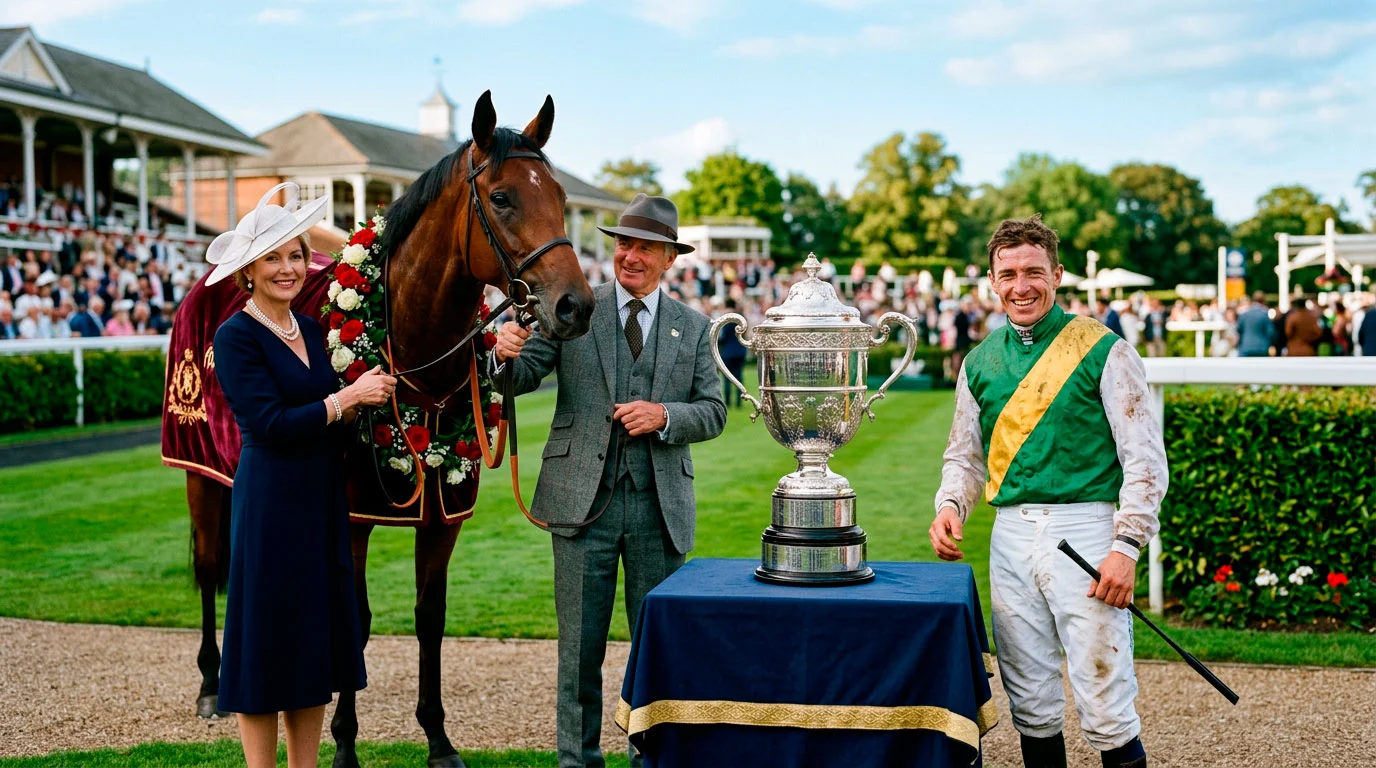
Track records at Epsom for the Oaks distance tell us about conditions and class rather than absolute speed comparisons. Love established the current record of 2 minutes 34.06 seconds in 2020, according to Racing and Sports data. That time eclipsed Enable's 2:34.13 from her dominant 2017 victory, a performance that foreshadowed her remarkable career including two Arc triumphs. Both times came on quick ground that allowed sustained galloping; softer conditions produce slower times without diminishing the merit of those victories.
Trainer dominance has characterised certain eras of Oaks history. Robert Robson won a remarkable 13 editions between 1802 and 1825, a record unlikely ever to be surpassed. In the modern era, Henry Cecil's eight victories established him as the defining trainer of his generation. Contemporary dominance takes different forms, with leading operations leveraging resources and expertise to produce sustained success at the highest level.
Sun Princess achieved one of racing's most visually stunning victories in 1983, crossing the line twelve lengths clear of the field. That margin remained the widest in Oaks history until Snowfall established a new record of sixteen lengths in 2021. Such outlier results remind punters that exceptional fillies occasionally emerge whose class transcends normal form analysis, though backing such individuals at odds that reflect their true ability represents the perennial challenge.
The Fillies' Triple Crown
The Fillies' Triple Crown represents British racing's ultimate test for a three-year-old filly: winning the 1000 Guineas over a mile at Newmarket in May, the Oaks over twelve furlongs at Epsom in June, and the St Leger over fourteen and a half furlongs at Doncaster in September. The increasing distances demand versatility across the Classic season, requiring speed for the Guineas, stamina for the Oaks, and the constitution to maintain peak form through the extended campaign.
Fillies' Triple Crown: 1000 Guineas (1 mile, Newmarket, early May) followed by the Oaks (1m4f, Epsom, early June) followed by the St Leger (1m6½f, Doncaster, mid-September). The progression demands a filly with speed, stamina, and the durability to contest three Group 1 races across five months.

Few fillies attempt the full Triple Crown, and fewer still complete it. The challenge lies not merely in ability but in the physical and mental demands of maintaining peak condition through a punishing schedule. Many connections prefer to protect their fillies after Oaks success, either retiring them to stud or targeting alternative autumn prizes like the Prix de l'Arc de Triomphe. Enable, despite her exceptional ability, never contested the St Leger, her connections opting instead for the Arc path she later dominated.
The Ballydoyle operation has dominated the Fillies' Triple Crown components in the modern era. Together with John Gosden, Aidan O'Brien has accounted for 10 of the last 11 Oaks according to GeeGeez analysis, representing the kind of sustained dominance that demands attention from any serious punter. O'Brien's record 11 Oaks victories overall make him the most successful trainer in the race's modern history. This isn't merely about backing O'Brien runners blindly; it requires understanding which filly carries primary stable confidence when multiple candidates appear on the entry list. Jockey bookings, particularly when Ryan Moore takes the mount, often reveal internal hierarchy.
Susan Magnier's ownership record underscores the Coolmore operation's Oaks pedigree. Her ten victories as owner or co-owner include the 2025 winner Minnie Hauk, continuing a pattern that stretches back decades. For punters, this ownership concentration suggests that Coolmore-connected fillies in the Oaks market deserve serious consideration regardless of precise stable confidence signals. The operation's resources, expertise, and track record create a selection profile that routinely delivers results.
Frequently Asked Questions
What is the Fillies' Triple Crown and how does it relate to the Oaks?
The Fillies' Triple Crown comprises three British Classics run at progressively longer distances through the season. It begins with the 1000 Guineas over one mile at Newmarket in early May, continues with the Oaks over one mile four furlongs at Epsom in early June, and concludes with the St Leger over one mile six and a half furlongs at Doncaster in September. The Oaks serves as the middle leg, testing whether a filly who showed speed at Newmarket can demonstrate the stamina required for middle distances. Completing the Triple Crown requires exceptional versatility and durability, which explains why so few fillies attempt all three legs in modern racing.
Does draw position matter at Epsom for the Oaks?
Draw position significantly influences Oaks outcomes. Statistical analysis from FlatStats shows that low stall positions, particularly stalls 1 and 2, produce winners at just 5% strike rate compared to 8-9% for middle and higher draws. The Actual versus Expected ratio of 0.58 for low draws indicates these positions win barely half as often as market odds would suggest. The disadvantage stems from Epsom's unique topography: runners drawn inside must navigate Tattenham Corner's camber while maintaining position against horses with more room to manoeuvre from wider berths. When assessing Oaks contenders, adjust your assessment slightly upward for fillies drawn in middle stalls and downward for those trapped near the rail.
Which trial races are most predictive of Oaks success?
The 1000 Guineas serves as the most prestigious Oaks trial, with eight previous winners having contested that race. The Musidora Stakes at York provides a direct test over the Oaks distance, making it particularly useful for assessing stamina credentials. The Lingfield Oaks Trial attracts attention because Lingfield's undulating Polytrack somewhat mimics Epsom's topography; Anapurna completed the Lingfield-Oaks double in 2019. The Cheshire Oaks at Chester tests balance and adaptability on a tight, undulating track. Regardless of trial route, recent form consistency matters most: 20 of 23 recent winners finished first or second in their final prep run.
What does Non-Runner No Bet mean for Oaks betting?
Non-Runner No Bet is a promotional offer from bookmakers that refunds your stake if your selected horse fails to start the race. Under standard betting rules, ante-post wagers on horses that withdraw through injury, illness, or trainer decision are treated as losing bets with no refund. NRNB protection eliminates that risk, though odds under NRNB terms typically sit shorter than standard ante-post prices to reflect the insurance value. For the Oaks, NRNB offers prove particularly useful when backing horses several weeks before the race, when withdrawal risk remains elevated. Always check the specific terms, as some operators cap refunds or exclude certain bet types.
When is the Oaks 2026 and what time does it start?
The 2026 Epsom Oaks takes place on Friday 5 June, the opening day of the Derby Festival at Epsom Downs. Post time typically falls in the early afternoon, usually around 4:30pm BST, positioning the race as the feature event of Oaks Day. The exact time is confirmed closer to the meeting when the full racecard is published. The Derby follows on Saturday 6 June, making the two-day festival the premier Classic weekend in British Flat racing.
Responsible Gambling
Betting on horse racing should remain an enjoyable form of entertainment rather than a source of financial stress. Set deposit limits before the Derby Festival begins, stick to predetermined stakes, and never chase losses by increasing bet sizes after unsuccessful wagers. If gambling stops being fun, resources exist to help.
The British racing industry operates within a robust regulatory framework designed to protect participants. "Levy yield for the 12 months to 31 March 2025 reached almost £109m, the fourth successive year of increase and the highest since the Levy collection reforms of 2017," noted Alan Delmonte, Chief Executive of the Horserace Betting Levy Board. That levy funds industry initiatives including welfare programmes and integrity monitoring, demonstrating the sport's commitment to sustainable practices.
Support organisations provide confidential assistance to anyone experiencing gambling-related difficulties. BeGambleAware offers information, advice, and access to trained counsellors. GamStop enables self-exclusion from all UK-licensed online gambling sites through a single registration. These resources exist without judgment: seeking help represents strength rather than weakness.
"Not all of the changes we have introduced will be immediately successful," acknowledged Richard Wayman, Director of Racing at the British Horseracing Authority, regarding industry-wide responsibility measures. "Some may take time to bed in, behaviour change frequently does, and some may not work at all." That honest assessment reflects genuine engagement with gambling harm reduction rather than superficial compliance.
