
Each-Way Betting on the Oaks
 Available in US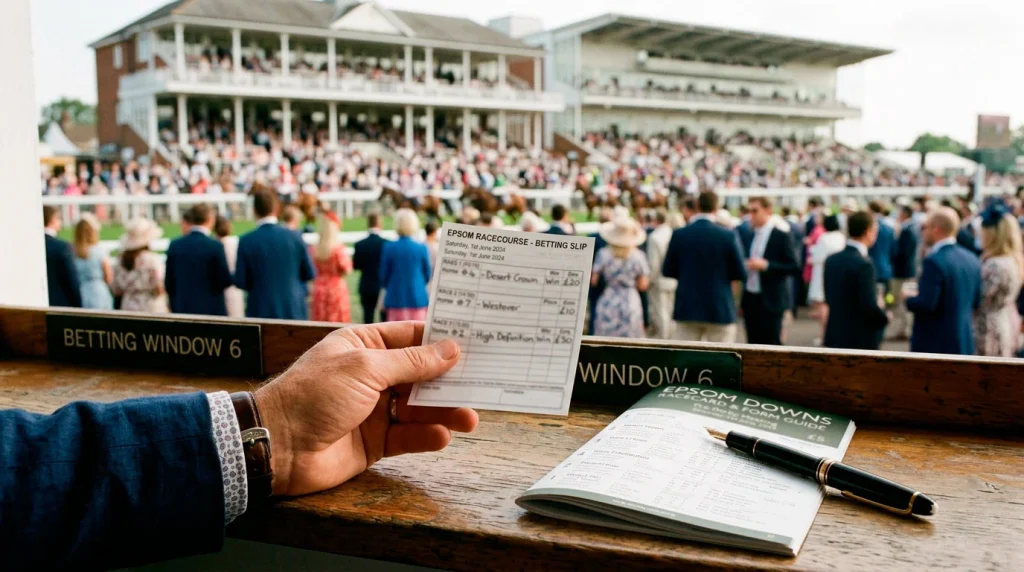
Each-Way Basics
An each-way bet is two bets in one: a win bet and a place bet. You back your selection to finish first, and simultaneously back it to finish in the places, usually the top three or four depending on field size. Both parts carry equal stakes, so a £10 each-way wager costs £20 in total. If your horse wins, both bets pay out. If it places without winning, only the place portion returns. If it finishes outside the places, you lose the lot.
For the Epsom Oaks, each-way betting holds particular appeal. The race has a history of surprising results; only two of the last twelve favourites managed to win, according to HorseRacing.Guide. That level of unpredictability makes the place market valuable. You can back a 14/1 shot knowing that even if she finishes third, you collect something. The insurance is built into the bet structure.
Each-way suits punters who want exposure to longer-priced runners without the all-or-nothing tension of a win-only punt. It doubles your stake outlay, but it also broadens your margin for success. In a Classic where the final quarter-mile can turn on stamina, courage, and the Epsom camber, that extra margin matters.
The Oaks field typically numbers between ten and fourteen runners, which influences standard place terms. The interplay between field size, odds, and bookmaker terms determines whether each-way represents value or merely splits your money across two propositions. Understanding how that equation works is the first step to using each-way betting effectively.
How Place Terms Affect Returns
Place terms define two things: how many positions count as a place, and what fraction of the win odds applies to the place part of your bet. Standard terms for a handicap with sixteen or more runners might be quarter the odds for four places. For the Oaks, with its typical field of ten to fourteen, expect one-quarter the odds for three places under most bookmakers’ standard conditions.
The fraction matters enormously. If you back a filly at 12/1 each-way with quarter-odds place terms, the win part pays 12/1, but the place part pays only 3/1. Your £10 place stake returns £40 (£30 profit plus £10 stake) if she finishes second or third without winning. Compare that to one-fifth the odds: the same selection would return £34 (£24 profit plus stake). Over dozens of bets, that difference compounds.
Some bookmakers offer enhanced place terms on major races. During the Derby Festival, you may find one-fifth odds for four places on the Oaks, or even more generous promotions. These offers tilt the value equation. A filly at 10/1 each-way pays 2/1 at one-fifth the odds for a place finish, versus 2.5/1 at quarter odds. Seeking out the best terms before placing your bet is basic due diligence.
Field size shifts standard terms. If withdrawals reduce the Oaks field below eight, most bookmakers pay only two places. Below five, each-way betting often becomes win-only by default. Late scratchings can therefore transform a solid each-way proposition into a much narrower bet. Checking terms on the morning of the race is prudent, particularly if overnight news hints at possible non-runners.
The competitive landscape among bookmakers means you can shop around. One firm might offer quarter odds for three places while another offers one-fifth for three places on the same race. Price comparison applies to place terms just as it does to headline odds.
When Each-Way Offers Best Value
Each-way betting is not always the right choice. The value hinges on the gap between your horse’s chance of winning and its chance of placing. If you believe a 10/1 shot has a genuine 10% win probability, you are getting fair odds on the win portion. The question then becomes whether quarter odds of 2.5/1 fairly reflects her place probability. If you think she places more often than implied by 2.5/1 (roughly 28.5%), the each-way bet offers value.
The Oaks regularly produces scenarios where this calculation favours each-way punters. The average winning starting price over the past decade sits around 10/1, according to HorseRacing.Guide, which suggests the market consistently underestimates middle-rank contenders. Fillies priced between 8/1 and 16/1 often possess the form to hit the frame even when a classier rival outstays them in the final furlong.
Specific form patterns boost each-way appeal. A filly who ran a strong second in the Musidora or Lingfield Trial may not be fancied to reverse form with the winner, but her trial performance proves she handles a staying trip under pressure. Backing her each-way captures value if the market fixates on the winning horse while underrating the runner-up’s consistency. Class animals tend to keep hitting the board; that is where each-way shines.
Conversely, each-way loses its edge at short prices. A 3/1 favourite paying 3/4 for a place offers thin margins. You tie up twice the stake to collect modest returns on a place finish. For short-priced fancies, a straight win bet often makes more sense. The each-way structure works best when odds are long enough for the place fraction to represent meaningful value.
Consider the race dynamics too. If the pace looks likely to be strong and several front-runners are entered, closers with stamina reserves may pick up places as early leaders fade. That kind of race shape is ideal for an each-way bet on a hold-up filly trained for the Epsom hill.
Calculating Each-Way Payouts
The arithmetic is straightforward once you understand the components. Take a £10 each-way bet on a horse at 14/1 with quarter-odds place terms for three places. Your total outlay is £20: £10 on win, £10 on place. The place odds are 14 divided by 4, which equals 3.5/1.
If the horse wins, you collect both parts. The win stake of £10 at 14/1 returns £150 (£140 profit plus £10 stake). The place stake of £10 at 3.5/1 returns £45 (£35 profit plus stake). Total return: £195 from a £20 bet, representing a profit of £175.
If the horse places without winning, only the place portion pays. Your £10 at 3.5/1 returns £45. You lose the £10 win stake, so your net outcome is £45 minus £20 total outlay: a profit of £25. Not spectacular, but positive.
If the horse finishes outside the places, both stakes are lost. The £20 is gone. Each-way is not magic; it simply rebalances risk across two outcomes. The key calculation before any bet is whether the combined probability of winning plus placing exceeds the cost implied by doubling your stake. For a 14/1 shot each-way, you need your filly to hit the frame often enough to justify tying up twice the capital you would commit to a win-only wager.
Many punters run these numbers instinctively, but writing them down clarifies whether each-way genuinely suits your selection or merely dilutes a win bet that either wins big or loses everything.
Responsible Gambling
Each-way bets double your stake, which makes bankroll discipline doubly important. It is easy to treat the place component as a safety net and inflate overall spending. Set clear limits before the meeting begins and stick to them. If betting stops being enjoyable or you find yourself chasing losses across the card, consider taking a break. Resources such as BeGambleAware offer guidance and support. The Oaks should be entertainment, not a source of financial strain.
Each-Way Betting on the Oaks — More on this topic at epsom oaks betting.
See also Oaks Forecast and Tricast Betting.
