
What Is the Epsom Oaks? The Fillies’ Answer to the Derby
 Available in US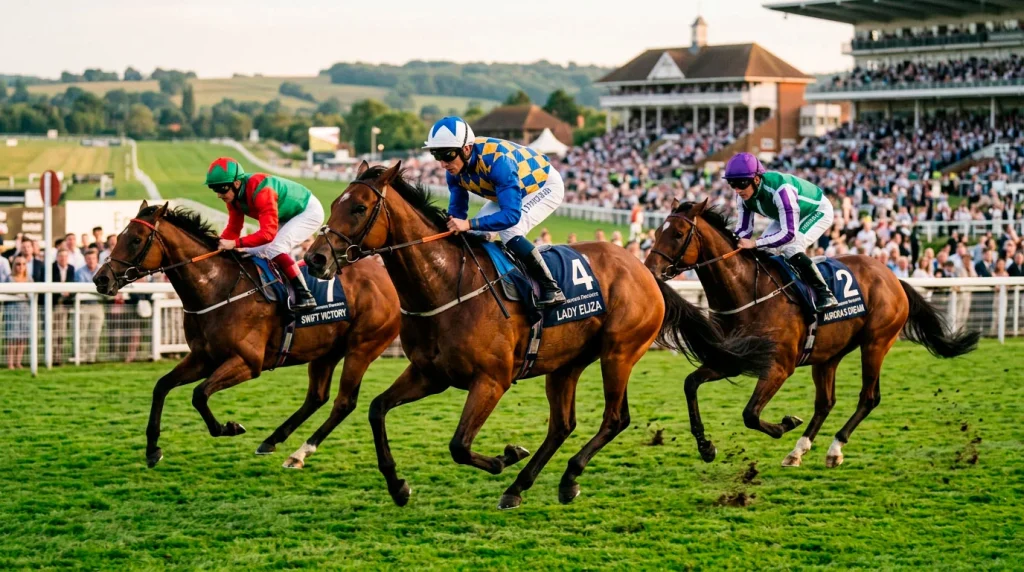
Introduction: Defining the Oaks
The Epsom Oaks stands as British flat racing’s premier test for three-year-old fillies. First run in 1779, one year before the Derby itself, this Group 1 Classic has crowned generations of exceptional female Thoroughbreds over its mile-and-a-half distance. For anyone entering the world of horse racing, understanding the Oaks means understanding the pinnacle of the fillies’ division.
The race takes its name from an estate near Epsom owned by the 12th Earl of Derby, where the idea for this contest was conceived during a house party in 1778. That historical connection gives the Oaks genuine heritage, linking modern racing to the Georgian era when organised Thoroughbred competition first took shape in Britain. The race predates the Derby by a year, making it the second oldest of the five English Classics after the St Leger.
Run on the Friday of the Derby Festival at Epsom Downs, the Oaks occupies a unique position in the racing calendar. It serves simultaneously as a standalone Classic, a trial for future middle-distance campaigns, and a betting event that attracts attention from casual punters and professionals alike. The fillies’ answer to the Derby is no mere supporting act; it is a championship race in its own right, offering insights into which three-year-old fillies will dominate their division through the summer and autumn.
Race Conditions and Eligibility
The Oaks restricts entry to three-year-old fillies, establishing a level playing field where age and sex conditions remove variables that complicate other Group 1 events. Every runner carries the same weight of nine stone, with no penalties or allowances to adjust for previous achievements. This purity of competition means the race genuinely tests ability rather than the handicapper’s assessment.
Entry requires either original nomination at the early closing stage or supplementary entry closer to the race, with the latter costing substantially more. Major operations typically nominate their promising fillies early, while connections of later-developing types may opt for the supplement route if trial form justifies the expense. Either way, appearing in the Oaks field signals serious Classic intent from connections willing to commit resources to the challenge.
The mile-and-a-half distance demands proven stamina credentials. Fillies who have not demonstrated the ability to stay beyond a mile face significant questions at Epsom, where the undulating track compounds the trip’s demands. Most successful Oaks contenders arrive having won or placed over at least ten furlongs, confirming that their pedigrees translate to racecourse performance.
Epsom’s left-handed configuration and unique topography add further conditions beyond mere distance. The climb from the start, the descent toward Tattenham Corner, and the camber through the home straight all test attributes that flat tracks never examine. Eligibility gets a filly to the start; handling Epsom gets her to the finish in contention. The track’s demands explain why certain fillies who excelled elsewhere have disappointed at Epsom, unable to cope with challenges they had never previously encountered.
Why the Oaks Matters in British Racing
The Oaks carries significance that extends far beyond a single afternoon’s sport. As one of the five English Classics, it shapes breeding decisions, training reputations, and the commercial value of bloodlines for generations. A filly who wins the Oaks immediately becomes one of the most valuable broodmare prospects in the Thoroughbred world.
British racing contributes approximately £4.1 billion annually to the UK economy, and flagship events like the Oaks drive much of that activity. The race draws international attention from breeders, owners, and punters, positioning Epsom Downs as a global stage during the first week of June.
For trainers, the Oaks represents a career-defining target. Those who develop the skill to prepare fillies for its specific demands build reputations that attract quality horses in future seasons. The race tests not only equine ability but also human expertise in conditioning, timing, and tactical planning. Winning trainers earn respect that transcends the single result, establishing themselves as masters of the Classic programme.
Brant Dunshea, CEO of the British Horseracing Authority, has observed the growing interest in analytical approaches to racing. “There is undoubtedly an ever-growing desire for data among those consuming and betting on racing,” he noted. “As other sports continue to develop ways in which their fans can gain greater insights through use of real-time data, this is clearly an area in which racing can continue to evolve.” The Oaks, with its rich historical dataset and annual renewal, provides exactly the kind of information that modern punters seek.
The betting markets reflect this significance. Oaks Day attracts turnover that ranks among the highest of any British flat racing fixture, with ante-post interest beginning months before the race and reaching fever pitch in the final days before declarations. Bookmakers offer extensive each-way terms and promotional offers that make the race accessible to newcomers while rewarding serious form students.
The Oaks vs The Derby
The Oaks and Derby share a course, a festival, and a distance, but they differ in ways that matter to serious racing students. Understanding these differences helps newcomers appreciate why both races deserve independent attention rather than treating the Oaks as merely the Derby’s little sister.
Field composition marks the most obvious distinction. The Derby admits colts, fillies, and geldings, though fillies rarely run and geldings are excluded from Classic competition. The Oaks restricts entry to fillies only, creating a contest where the highest-quality female three-year-olds meet without interference from male rivals. This purity of competition often produces clearer form lines than the Derby’s mixed fields.
Typical pace scenarios differ between the races. Derby fields often include several horses whose connections view the race as a test of raw speed, leading to stronger early fractions. Oaks fields tend toward steadier pace, with fillies generally racing more tactically than colts. This dynamic affects draw bias, running style advantages, and the types of horses who prosper at Epsom.
Prize money favours the Derby, which offers roughly triple the Oaks purse. This disparity reflects historical patterns rather than relative race quality, and efforts continue to close the gap. For owners and breeders, however, the prestige of an Oaks victory compensates for the smaller cheque, as the winner’s value as a breeding prospect often exceeds her racing earnings.
The races occupy different positions in the festival schedule. The Oaks runs on Friday, the Derby on Saturday. This sequencing gives Friday’s race a distinct atmosphere, with crowds building toward the weekend while Friday maintains its own character as Ladies Day. Some punters prefer Friday’s slightly smaller attendance, finding it easier to navigate the course and secure viewing positions.
From a betting perspective, both races present opportunities and challenges. The Oaks often features smaller fields than the Derby, reducing the number of variables but also compressing odds. The Derby’s larger fields can produce more generous prices for astute punters who identify overlooked contenders. Both races reward thorough form study and an understanding of how Epsom’s unique track shapes outcomes.
Responsible Gambling
The Oaks offers exciting betting opportunities, but wagering should remain within your means. Set a budget before the meeting and stick to it regardless of results. If gambling causes concern, BeGambleAware and GamStop provide support and self-exclusion options.
What Is the Epsom Oaks? The Fillies’ Answer to the Derby — More on this topic at epsom oaks betting.
See also Epsom Oaks 2026 Date and Time.
