
Epsom Oaks Betting Strategy: Each-Way, Ante-Post and Value Plays
 Available in US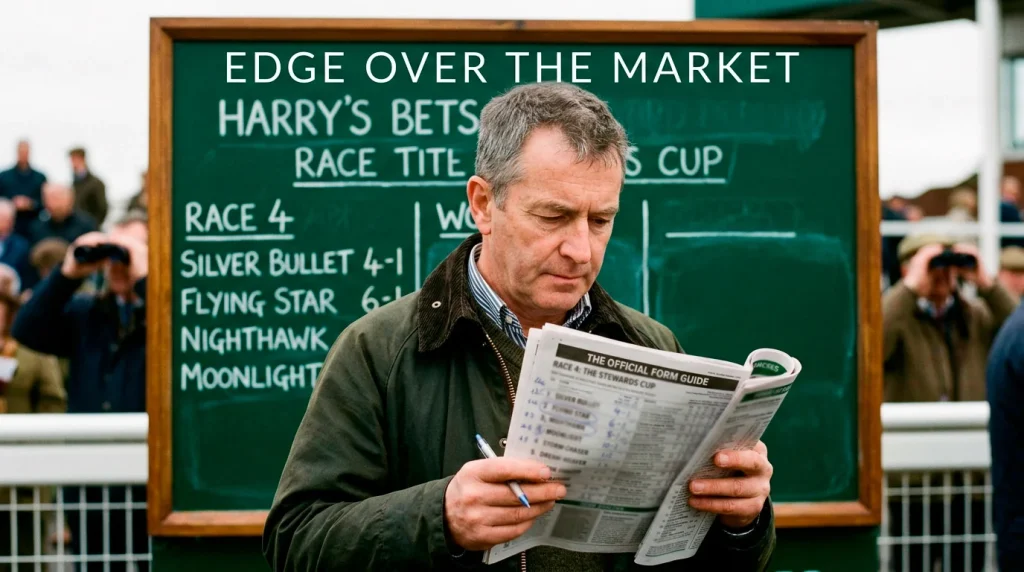
Introduction: Why Strategy Beats Hunches
The Oaks rewards strategic thinking. While casual punters pick names or colours, those who approach the race with a system gain measurable edges over the market. The data is unambiguous: only two of the last 12 Oaks favourites have won, a strike rate of just 17 percent. Backing market leaders without further analysis produces consistent losses.
This underperformance by favourites points toward the core strategic principle: the Oaks market frequently misprices chances. Fillies attract support based on reputation, trainer name and superficial form, inflating their odds beyond reasonable probability. Meanwhile, genuinely competitive runners at bigger prices go underbet. The gap between market price and actual chance creates value opportunities for those willing to look beyond the obvious.
Strategy encompasses multiple dimensions. When to bet matters as much as what to bet. The type of bet influences expected returns. Stake sizing determines whether profitable angles translate into actual profits. This guide addresses each dimension, providing a framework for Oaks betting that maximises long-term expectation rather than chasing single race outcomes.
Professional punters treat the Oaks as one race among many rather than a standalone event demanding special treatment. The principles that guide profitable betting throughout the season apply equally on Oaks Day. Form analysis, draw assessment, trainer records and value calculation combine into selections that offer positive expected returns regardless of outcome on any individual race.
Edge over the market does not guarantee winners. Even optimal strategy produces losers more often than winners, because horse racing contains irreducible uncertainty. What strategy provides is positive expected value: bets whose average return exceeds the stake over time. Accepting short-term variance while maintaining strategic discipline defines successful racing punters.
The Favourite Fallacy: Data on Market Leaders
The favourite fallacy haunts Oaks betting. Punters assume market leaders represent the best chance, yet historical evidence suggests otherwise. The market’s collective wisdom consistently overestimates obvious contenders while undervaluing less prominent runners.
The average winning starting price over the past decade sits around 10/1, far longer than typical favourites. This statistic reveals structural value in the middle and lower market ranks. Fillies at 8/1, 10/1 or 12/1 win with sufficient frequency to reward patient backers, while shorter priced runners fail to justify their odds.
Ten of the last 12 Oaks winners started at 5/1 or longer. This pattern holds through varying conditions, field sizes and levels of competition. The consistency suggests systemic factors rather than random fluctuation: the market genuinely misprices Oaks chances, creating opportunities for those who bet against the crowd.
Why do favourites underperform? Several factors contribute. The race itself involves Epsom’s unique terrain, which exposes weaknesses that flat galloping tracks might hide. Highly regarded fillies often attract support based on trial wins at conventional venues, yet struggle with Tattenham Corner’s demands. Their reputations precede them, but their abilities do not match expectations.
Field composition also affects favourite performance. Small Oaks fields increase favourite win probability; larger fields distribute outcomes more evenly. In a twelve-runner field with genuine depth, even the best filly faces significant opposition. Checking field size and quality before assessing favourite reliability adds important context to betting decisions.
The ante-post market compounds the problem. Fillies backed heavily weeks before the race accumulate money that depresses their starting price regardless of developments. Setbacks, poor draws or suspect trial form fail to move prices as much as they should, because early support creates price rigidity. Late information advantages punters who wait while disadvantaging those who backed blindly early.
Contrarian betting exploits this dynamic. Instead of backing the favourite, look for the filly the market should favour but does not. A progressive profile, a good draw, a trainer with an Epsom record, perhaps even a whisper from the yard: these factors identify runners whose true chances exceed their prices. The Oaks regularly produces winners from the second, third or fourth tier of market support.
Laying favourites offers another approach. If the market leader is genuinely overbet, opposing them produces profit when any other filly wins. This strategy requires exchange accounts and comfort with laying mechanics, but the data suggests consistent value in taking on short-priced Oaks runners. The favourite fallacy, properly exploited, becomes a profit source.
Each-Way Betting: Extracting Extra Value
Each-way betting suits the Oaks perfectly. Fields typically range from eight to twelve runners, triggering place terms of one quarter the odds for first, second and third. This structure rewards selectivity: finding fillies who may not win but will place reliably turns a race with one winner into a race with three profitable outcomes.
The mathematics of each-way betting deserve attention. A £10 each-way bet at 8/1 costs £20 total: £10 to win at 8/1 and £10 to place at 2/1 (one quarter of 8/1). If your selection wins, you collect £80 plus £20, returning £100. If they place but do not win, you collect £30. The breakeven probability for the full bet differs from the win probability alone, tilting calculations toward value at longer odds.
Field size affects place terms. In fields of eight to eleven runners, standard bookmaker terms pay three places at one quarter odds. Smaller fields may pay only two places, dramatically reducing each-way value. Check declared runners and terms before committing stakes. Enhanced place terms occasionally appear for major races, sometimes paying four or five places at reduced fractions.
Identifying place candidates requires different form reading than picking winners. A filly who finishes strongly but lacks the acceleration to win may place consistently. Trainers with records of running fillies into places rather than wins deserve attention. Draw positions that suggest trouble-free runs improve place probability even if winning seems unlikely.
Each-way betting works best in competitive renewals where no standout dominates. When a genuine superstar contests the Oaks, place money backs runners who will finish behind her, diminishing value. When the field looks open, each-way selections can profit from any of several outcomes. Assess field quality before deciding between win-only and each-way strategies.
Comparing bookmaker each-way terms reveals hidden value. Some operators offer enhanced places as promotions; others maintain standard terms but offer better win odds. The optimal bookmaker for each-way betting depends on specific selections and available prices. Shopping across multiple accounts maximises returns from each-way approaches.
Multiple each-way bets spread risk across the field. Two or three each-way selections at 8/1 to 14/1 can produce positive results if one places, covering stakes and potentially profiting. This portfolio approach accepts lower individual returns in exchange for higher probability of some return. For punters seeking more consistent outcomes than win-only betting provides, multiple each-way selections offer a structured alternative.
Ante-Post Timing: When to Strike
Ante-post markets open months before the Oaks, offering prices that fluctuate dramatically as information emerges. Timing your entry into this market affects expected returns significantly. The depth of ante-post activity reflects industry health: levy yield reached £108.9 million in 2026/25, indicating robust betting volumes across major races.
“Levy yield for the 12 months to 31 March 2026 reached almost £109m, the fourth successive year of increase and the highest since the Levy collection reforms of 2017 albeit short of the 2007/08 record of £116.5m.” — Alan Delmonte, Chief Executive, Horserace Betting Levy Board
Early ante-post betting offers the longest prices but carries the most risk. Fillies who look promising in February may encounter setbacks before June. Injuries, illness, training complications or simply failing to progress can remove selections before they reach the starting stalls. Ante-post stakes on non-runners are lost unless specifically protected by NRNB terms.
The optimal ante-post window often falls after major trials but before final declarations. By mid-May, the picture clarifies substantially: trial form provides evidence, trainer intentions become clear, and remaining uncertainties concentrate on race day factors like draw and ground. Prices at this stage typically offer better value than starting prices while carrying less risk than early winter betting.
Watch for market over-reactions to trial results. A dominant Musidora win may attract heavy support that compresses the price beyond fair value. A narrow trial defeat may drift a genuine contender to generous odds. These movements create windows for shrewd punters: back the drifters who retain ability, oppose the steamers whose trial form may not transfer to Epsom.
Ante-post each-way betting requires additional calculation. Place terms may differ from raceday each-way; some bookmakers offer enhanced places for ante-post bets. The risk of non-runners affects each-way stakes just as it does win stakes. Consider whether ante-post each-way value justifies the additional non-runner risk compared to waiting for raceday markets.
NRNB Offers: Protecting Your Stake
Non Runner No Bet offers provide protection against ante-post risk. When a bookmaker offers NRNB terms, your stake returns if your selection does not run, eliminating the primary ante-post danger. These offers typically appear for major races including the Oaks, though terms vary between operators.
NRNB comes at a cost. Bookmakers shorten prices when offering stake protection, recognising that the reduced risk justifies lower returns. A filly available at 12/1 ante-post without protection might be 10/1 or 8/1 with NRNB. The punter must decide whether stake security justifies accepting worse odds. For risk-averse bettors, the answer is often yes.
The calculation depends on perceived non-runner probability. A robust, well-campaigned filly from a major stable faces lower non-runner risk than a lightly raced prospect from a smaller yard. For the former, accepting worse NRNB odds may represent poor value. For the latter, stake protection becomes more valuable. Assess each selection individually rather than applying blanket rules.
NRNB terms sometimes include conditions. Stakes may refund only for certain withdrawal reasons, or refunds may process as free bets rather than cash. Reading terms before betting prevents unpleasant surprises. The headline NRNB offer may be less valuable than it appears if conditions limit its applicability.
Timing affects NRNB availability. Some bookmakers offer protection only until certain dates, withdrawing the guarantee as the race approaches. Others maintain NRNB until final declarations. Understanding each operator’s approach helps time entries optimally, securing protection when available while maintaining flexibility for late market movements.
Combining NRNB bets with unprotected ante-post positions offers a middle path. Back your strongest selection with NRNB protection, accepting slightly shorter odds for security. Back longer-shot speculative selections without protection, accepting higher risk in exchange for maximum price. This blended approach balances risk and reward across the Oaks portfolio.
Some punters prefer to avoid ante-post entirely, waiting for raceday markets where all runners are confirmed. This approach eliminates non-runner risk completely but sacrifices potential value from early prices. The choice between ante-post (with or without NRNB) and raceday betting reflects individual risk tolerance rather than objective optimality.
Forecast and Tricast Markets
Forecast and tricast markets offer inflated returns for correctly predicting finishing positions. A straight forecast requires naming the first and second in correct order; a tricast demands first, second and third. The difficulty justifies substantial payouts, sometimes returning hundreds of times the stake.
Computer forecasts and tricasts return dividends calculated by the Tote pool, with payouts varying based on the specific combination and amount staked on that outcome. Reverse forecasts cover both possible orderings of two selections, costing twice the straight forecast stake but winning if either order materialises. Combination forecasts extend this principle to three or more selections.
The Oaks field size makes forecasts more accessible than many races. With eight to twelve runners rather than twenty, the number of possible combinations remains manageable. A straight forecast in a ten-runner race has 90 possible combinations; covering several combinations requires modest stakes to achieve meaningful coverage.
Selecting forecast combinations requires different thinking than picking winners. Consider which fillies consistently finish in the frame regardless of pace or draw. Identify likely front-runners who may set the race up for closers. Think about which runners the market undervalues for placing purposes. A forecast combining an underrated winner with an obvious favourite in second can produce substantial returns.
Tricast betting suits open renewals where form suggests multiple genuine contenders. Banker-based combinations reduce costs: select one certain placer and combine with multiple options for the other positions. A tricast perm covering one selection in first, second or third with various combinations underneath captures multiple winning scenarios at controlled cost.
The Tote pool determines exotic dividends, and pool liquidity affects returns. Major races like the Oaks attract substantial pool volumes, producing more stable dividends than smaller races. However, popular combinations pay less than unusual outcomes. Finding value in forecasts and tricasts requires identifying combinations the public overlooks while you assess correctly.
Combining exotic bets with straightforward win or each-way selections creates a layered approach. The exotic portion offers lottery-style returns with small stakes; the conventional portion provides steadier expected returns. This combination captures potential for large wins while maintaining consistent betting discipline.
Volatility characterises exotic markets. Tricasts that seem likely can fail completely when an unexpected runner fills a frame position. The high variance makes these bets unsuitable for stake-heavy betting but attractive for small-stake speculative plays where maximum return matters more than probability of return.
Bankroll Management for Classic Betting
Bankroll management transforms good analysis into sustainable profit. Without disciplined staking, even accurate selections fail to produce long-term gains. The Oaks represents a single race in a lengthy flat season; treating it as one data point in a larger strategy prevents the emotional overcommitment that destroys betting banks.
Establish a racing bankroll separate from other funds. This amount represents money you can afford to lose completely without affecting your life. Never add to the bankroll from essential funds after losses, and never stake more than predetermined percentages on any single race.
Flat staking suits most punters. Betting the same amount on each selection regardless of confidence simplifies decisions and prevents stake escalation following losses. A one to two percent stake per selection allows fifty to one hundred bets before potential bank depletion, providing adequate sample size for strategy evaluation.
Proportional staking adjusts stakes based on perceived edge. Selections judged to have greater value receive larger stakes; marginal selections receive smaller amounts. This approach potentially increases returns but requires accurate self-assessment of selection quality. Overconfidence in edge estimation produces stake distributions that amplify rather than optimise.
The Kelly Criterion provides mathematical guidance for proportional staking. This formula calculates optimal stake based on perceived probability and available odds. However, Kelly stakes can be aggressive, and many punters prefer fractional Kelly approaches that reduce variance at the cost of theoretical maximum growth. Understanding the maths helps even if you choose simpler approaches.
The Oaks as a single race warrants proportionate allocation. Concentrating half your seasonal bankroll on one race, regardless of confidence, introduces unnecessary variance. Treat the Oaks as one opportunity among many, staking amounts consistent with your standard approach. Major races do not inherently deserve larger stakes than everyday opportunities with similar perceived edges.
Emotional discipline matters as much as mathematical discipline. The urge to increase stakes after winners, or to chase losses after defeats, undermines systematic approaches. Sticking to predetermined rules regardless of recent results maintains the consistency that profitable betting requires.
Record keeping enables strategy refinement. Track all bets, including stake, odds, and outcome. Calculate return on investment over time. Identify patterns: do certain bet types consistently underperform? Do specific trainers or race types produce better results? Data-driven adjustment of strategy requires data; keeping records provides the foundation.
Combining Angles: A Multi-Factor Approach
The strongest Oaks selections emerge from multiple converging factors. A filly with one positive indicator may win; a filly with several positive indicators wins more reliably. Combining angles creates systematic edges that single-factor approaches cannot match.
Form analysis provides the foundation. Does the filly have proven stamina over the trip? Did her trial performance suggest improvement to come? Is her trainer adept at producing Epsom winners? These questions establish baseline capability before other factors enter consideration.
Draw analysis adds a layer. Middle stall positions correlate with better outcomes. A filly with strong form and a favourable draw becomes a stronger candidate than form alone would suggest. Conversely, an awkward draw may diminish an otherwise compelling selection, pushing you toward alternatives.
Market dynamics reveal information. Betting turnover on Premier fixtures increased 1.1 percent while Core fixtures declined, indicating concentrated interest on major events like the Oaks. Tracking early market movements identifies fillies attracting informed money before the general public reacts. Steam moves suggest positive intelligence; drifts may indicate problems unknown to the public.
Trainer and jockey combinations layer additional evidence. Aidan O’Brien with Ryan Moore at Epsom commands different respect than an inexperienced combination. Historical records at the course, with the specific horse type, in the particular conditions all contribute to probability estimates.
Synthesising factors requires weighting. Not all indicators matter equally. Trial form over the Oaks trip trumps maidens at shorter distances. A proven Epsom jockey matters more than a leading rider without track experience. Draw position in a maximum field matters more than in smaller renewals. Adjust weights based on specific race context.
The multi-factor selection often does not align with market favourite. If your analysis identifies a filly at 10/1 as the best combination of form, draw, trainer and value, backing her represents the strategic play regardless of market position. Trusting systematic analysis over market consensus distinguishes successful punters from followers of conventional wisdom.
Document your multi-factor reasoning before the race. This prevents post-hoc rationalisation and enables honest assessment of decision quality. Winners do not always vindicate analysis; losers do not always refute it. Understanding why selections were made, and whether reasoning was sound regardless of outcome, improves future decisions.
Responsible Gambling
Strategy improves betting outcomes but does not eliminate risk. Gambling should remain entertainment, never a financial strategy or emotional necessity. Even optimal approaches produce losses, and no system guarantees profit.
Set firm limits before the Oaks. Decide your maximum stake, stick to it regardless of circumstances, and walk away when that limit is reached. Never chase losses with increased bets. If gambling causes stress, anxiety or financial difficulty, seek support from BeGambleAware or the National Gambling Helpline.
Epsom Oaks Betting Strategy — More on this topic at epsom oaks betting.
See also Trainer and Jockey Oaks Statistics.
