
Epsom Oaks History and Records: Winners From 1779 to Today
 Available in US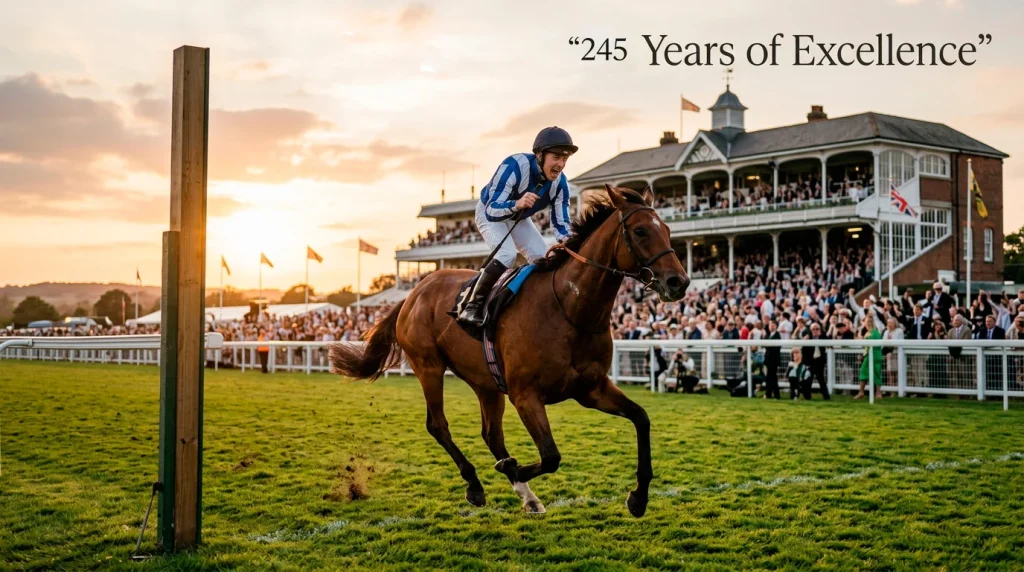
Introduction: Britain’s Oldest Fillies’ Classic
The Epsom Oaks stands as the definitive test for three-year-old fillies in British flat racing. First run in 1779, it holds the distinction of being the second oldest of the five English Classics, predated only by the St Leger. For 245 years, this one mile four furlong contest has separated the exceptional from the merely talented, producing a roll call of champions that reads like equine royalty.
Understanding Oaks history is not merely an exercise in nostalgia. The patterns embedded in nearly two and a half centuries of racing offer tangible insights for modern punters. Trainers who dominate this race tend to do so repeatedly. Track records fall to fillies with specific running styles. And certain trials have produced winners with a consistency that defies random chance. The past, properly interrogated, becomes a betting edge.
This guide traces the Oaks from its Georgian origins through Victorian dominance to the modern era of Enable, Love and the Ballydoyle juggernaut. Along the way, we examine the records that matter: fastest times, most prolific trainers, legendary jockeys and the defining margins that separated good fillies from great ones. Whether you are backing a fancied runner in the 2026 renewal or simply deepening your knowledge of British racing heritage, the history detailed here provides the foundation.
What makes the Oaks unique among Classics is its exclusivity. While the Derby attracts the best colts, the Oaks fields consist entirely of fillies, creating a different competitive dynamic. The winners often go on to define their generation, with some attempting the rarely achieved Fillies’ Triple Crown. This race crowns queens, not merely winners.
Origins: The First Oaks in 1779
The Oaks owes its existence to the 12th Earl of Derby and his aristocratic circle, who in 1778 had just established the Derby Stakes. The following year, they created a complementary race for fillies, naming it after Derby’s estate, The Oaks, in Woodmansterne near Epsom. The inaugural running took place on 14 May 1779, with a filly named Bridget claiming the first ever Oaks victory for Lord Derby himself.
That original contest bore little resemblance to today’s Group 1 spectacle. The distance was just one mile, the field was small, and the prize money reflected the era’s more modest commercial stakes. Yet the essential concept proved instantly compelling: a Classic test exclusively for three-year-old fillies, run over Epsom’s unique terrain. By 1784, the distance had been extended to the current mile and a half, creating the stamina examination that defines the race today.
The early decades established patterns that would persist. Lord Derby’s dual role as founder and winner set a template for aristocratic involvement that dominated well into the 20th century. The race attracted the best bred fillies from the most powerful studs, functioning as both sporting contest and commercial showcase. A filly who won the Oaks became significantly more valuable as future breeding stock, adding commercial weight to sporting glory.
Epsom itself contributed to the Oaks mystique. The undulating course, with its pronounced camber through Tattenham Corner and testing downhill run to the straight, demanded more than raw ability. Fillies needed balance, courage and the tactical nous to handle terrain that sorted the genuine stayers from those whose stamina was merely theoretical. From the very beginning, the Oaks was not just a race but an examination.
The naming convention proved prophetic. While the Derby became synonymous with the premier colt’s Classic and spawned imitations worldwide, the Oaks carved its own niche. The name itself entered racing vocabulary, with tracks across the globe creating their own Oaks races for fillies, all acknowledging the original at Epsom as the template.
Georgian racing operated under different rules than today. The Jockey Club regulated proceedings, but standards varied and controversies occasionally erupted over eligibility or conduct. The Oaks navigated these early challenges, emerging as a fixture respected by owners, trainers and the betting public. By the turn of the 19th century, winning the Oaks conferred genuine prestige, a status that would only grow as the decades passed.
The Golden Era: 19th Century Dominance
The 19th century witnessed the Oaks mature from aristocratic pastime to national sporting fixture. Training methods became more sophisticated, breeding programmes more scientific, and the competitive stakes considerably higher. This period produced the race’s first dynasty: trainer Robert Robson, who won the Oaks an astonishing 13 times between 1802 and 1825. No trainer since has approached this record, and given the dispersal of talent in modern racing, none likely will.
Robson’s dominance reflected the concentrated power of early 19th century British racing. Based at Newmarket, he trained for the leading owners of his generation, including the Duke of Grafton and Lord Egremont. His success in the Oaks demonstrated both his skill with fillies and his patrons’ commitment to breeding stock capable of winning Classics. Each victory reinforced his reputation, attracting better horses in a virtuous cycle that other trainers struggled to interrupt.
The Victorian era brought wider public engagement with the Oaks. Railway connections to Epsom made the Derby meeting accessible to Londoners in unprecedented numbers, and while the Derby drew the largest crowds, the Oaks on the preceding day established its own following. The race became woven into the social calendar, with attendance signifying both sporting interest and social standing.
Legendary fillies emerged from this period. Crucifix, winning in 1840, became one of the great names of early Victorian racing. Later in the century, fillies like Apology and La Fleche demonstrated that exceptional females could compete with the best colts of their generation. These performances elevated the Oaks from filly-only Classic to a race capable of identifying genuine champions.
The betting public embraced the Oaks with growing enthusiasm. Bookmakers established markets weeks before the race, and ante-post punting became an established part of the racing scene. Winners could be backed at substantial prices before the market condensed closer to race day, establishing patterns that continue to reward patient handicappers today.
The 19th century also codified the conditions that define the race today. Weight carried, eligibility criteria and timing within the racing calendar all crystallised during this period. By 1900, the Oaks had assumed essentially its modern form, ready to enter the 20th century as an established institution rather than an evolving experiment.
Modern Legends: Enable, Love and Record Breakers
The 21st century has produced Oaks winners that rank among the finest fillies in racing history. Two names stand above all others: Enable and Love, both of whom used the Oaks as a springboard to international stardom while rewriting the Epsom record books.
Enable’s 2017 victory remains the benchmark for how the race can be won. Trained by John Gosden and ridden by Frankie Dettori, she demolished a quality field by five lengths, recording a time of 2 minutes 34.13 seconds that stood as the track record until 2020. That Oaks launched Enable on a trajectory that would include two Prix de l’Arc de Triomphes and earnings exceeding £10 million. The margin and manner of her victory announced a filly of exceptional talent, and her subsequent career vindicated that assessment completely.
Three years later, Aidan O’Brien’s Love broke Enable’s record. On good to firm ground, she stopped the clock at 2 minutes 34.06 seconds, shaving seven hundredths off the previous best. Love’s victory demonstrated the Ballydoyle production line at its most efficient: a beautifully bred Galileo filly, prepared through Irish trials, delivered to Epsom in peak condition. The time reflected both the ground conditions and her exceptional ability to handle Epsom’s unique demands.
These record performances illustrate what it takes to win a modern Oaks. Raw speed matters less than the ability to gallop efficiently on challenging terrain. Both Enable and Love combined class with the temperament to settle in their races before producing devastating acceleration. They handled Tattenham Corner with balance, coped with the camber, and found more when asked in the straight. Their times quantify excellence, but their margins emphasise dominance.
The contrast with harder fought renewals is instructive. Many Oaks produce close finishes, with fillies separated by heads and necks. Enable won by five lengths, Love by nine. When genuine champions contest this race, they tend to announce themselves emphatically. For punters, identifying potential Enable-style performances before the off represents the ultimate Oaks challenge.
Beyond the record holders, the modern era has produced numerous high-class winners. Qualify, Minding, Forever Together and Dancing Rain all won the Oaks before making their marks at the highest level. The race continues to function as intended: identifying the best filly of her generation and launching her towards international recognition.
Trainer and Jockey Record Holders
The Oaks has been shaped by trainers and jockeys who returned to Epsom year after year with genuine contenders. Their records reveal both individual excellence and the structural advantages that produce repeat winners.
In the jockey standings, Frank Buckle holds the all-time record with nine Oaks victories, achieved between 1797 and 1823. Buckle’s era predated professional jockey retainers, meaning his success reflected genuine talent recognised by multiple owners. He rode during the formative decades of British racing, when the structures we now take for granted were still being established. His nine Oaks remain unsurpassed, a record that has stood for over two centuries.
The modern era offers a different competitive context. Jockeys now typically ride for major stables on retained contracts, giving the most successful operations first call on the best riders. Frankie Dettori has won seven Oaks, most recently aboard Emily Upjohn’s dramatic dead-heat in 2022 and the subsequent sole victory with Soul Sister in 2023. Dettori’s Epsom record extends beyond the Oaks to Derby victories, demonstrating his mastery of the unique track.
Among trainers, Robert Robson’s 13 victories remain untouchable. The modern record belongs to Sir Henry Cecil, who won eight Oaks between 1985 and 2007. Cecil’s winners included genuine champions like Oh So Sharp, Diminuendo and Light Shift. His ability to produce fillies for Epsom reflected both horsemanship and an understanding of the physical demands the track imposes.
Aidan O’Brien’s Oaks tally continues to grow. His Ballydoyle operation has dominated the race in recent years, with multiple winners demonstrating the stable’s systematic approach to Classic preparation. O’Brien tailors programmes specifically for Epsom, using Irish trials to build fitness while preserving freshness for the main event. His record suggests backing Ballydoyle runners deserves serious consideration, though field sizes mean converting strike rate to betting profit requires selectivity.
The owner records tell their own story. Susan Magnier has owned or co-owned ten Oaks winners, reflecting Coolmore’s commitment to fillies capable of winning Classics before entering their breeding programmes. The commercial logic is straightforward: Oaks winners produce valuable offspring. This alignment of sporting and commercial incentives ensures the race continues to attract the best fillies from the most powerful operations.
The Fillies’ Triple Crown Through History
The Fillies’ Triple Crown comprises three races: the 1000 Guineas at Newmarket in May, the Oaks at Epsom in June, and the St Leger at Doncaster in September. Completing all three requires a filly who combines speed, stamina and durability across four months of peak competition. The rarity of this achievement underscores its difficulty.
Oh So Sharp, trained by Henry Cecil, completed the Triple Crown in 1985, the most recent filly to do so. Before her, the honour belonged to Meld in 1955, and earlier still to Sun Chariot during wartime racing in 1942. These isolated achievements across decades demonstrate that the Fillies’ Triple Crown demands exceptional talent combined with sound constitution and tactical versatility.
The Oaks occupies a pivotal position in Triple Crown attempts. A filly arriving from a successful 1000 Guineas campaign must prove she stays the extra half mile. The Epsom terrain adds further complication, asking different questions than Newmarket’s galloping track. Many speedy Guineas winners have found the Oaks trip beyond them, their limitations exposed by Tattenham Corner and the stamina-sapping home straight.
Aidan O’Brien has won 11 Oaks in total, including seven of the last 12 renewals, sharing recent dominance with John Gosden. This concentration of success reflects both training excellence and access to the best bred fillies in European racing. Coolmore’s breeding operation supplies Ballydoyle with daughters of Galileo and other leading sires, fillies bred specifically to excel at middle distances. The Oaks represents a natural target for such recruits, with Triple Crown aspirations adding incentive for owners willing to campaign beyond Epsom.
Modern Triple Crown attempts typically founder on scheduling rather than ability. Connections may choose to skip the St Leger, preserving their filly for breeding or targeting autumn prizes like the Prix de l’Arc de Triomphe. Enable, arguably capable of completing the Triple Crown, never ran in the St Leger, her connections preferring a different programme. Such decisions are commercially rational but reduce Triple Crown completions to historical curiosity rather than contemporary objective.
For punters, Triple Crown context matters when assessing Oaks fields. A filly who won the 1000 Guineas arrives with proven class but stamina questions. A filly from trial routes may lack Group 1 experience but offer more certainty over the trip. History suggests both paths can produce Oaks winners, with trial form sometimes proving more reliable than Classic form at a shorter distance.
Oaks Legends: Defining Moments
Certain Oaks renewals transcend routine Classic competition, producing moments that define eras and shape the race’s mythology. These performances set standards against which future generations are measured.
Sun Princess provided the most dominant Oaks performance in modern memory, winning the 1983 renewal by twelve lengths. Trained by Dick Hern and ridden by Willie Carson, she annihilated a full Classic field with a display of sustained power that left observers struggling for adequate description. That margin remains the largest in Oaks history, a benchmark for exceptional fillies. Sun Princess went on to confirm her quality with victories in the St Leger and Yorkshire Oaks, but her Epsom demolition remains her defining performance.
Controversies have also marked the race. The 2022 renewal produced a dead-heat between Emily Upjohn and Tuesday, requiring a photo finish to separate fillies inseparable to the naked eye. Emily Upjohn had been badly hampered leaving the stalls, losing ground before gradually closing through the field. That she finished level with the winner despite losing multiple lengths at the start suggested she might have won clearly with a cleaner break. The incident illustrated how fine margins can determine Classic outcomes.
International raiders have occasionally disrupted British expectations. Ezeliya’s 2026 victory for Irish trainer Dermot Weld arrived 43 years after his previous Oaks win with Blue Wind in 1981. The span between victories illustrated both longevity and the fluctuating fortunes of racing careers. Weld, a master of international campaigning, demonstrated that patient programmes could still produce Classic success at Epsom.
“It’s fantastic to see the World Pool turnover figures up on last year, with the biggest Derby field since 2017. Lambourn was a great winner, and having such a large field was fantastic for the race and turnover.” — Jim Allen, General Manager, Epsom Downs Racecourse
The Oaks has also produced heartbreak. Fillies who arrived at Epsom as near certainties have found the track beyond them, their reputations diminished by a single afternoon. Others have emerged from nowhere, upsetting market leaders at substantial prices. Both outcomes remind punters that the Oaks, for all its history, remains a sporting contest where certainty is illusion.
How History Informs Modern Betting
History offers patterns, not certainties, but dismissing 245 years of evidence would be foolish. Several trends from the Oaks archive translate into actionable betting angles.
The favourite fallacy is perhaps the most striking. Only two of the last 12 Oaks favourites have won, a strike rate of just 17 percent. Punters backing the market leader at starting price have faced consistent disappointment. This underperformance may reflect the race’s tactical complexity, where early pace, draw position and jockey decisions create chaos that front-runners often cannot navigate. Equally, it may indicate that ante-post support inflates certain fillies beyond their true chance.
The corollary is more encouraging for value seekers. The average winning starting price over the past decade sits around 10/1, with multiple winners at double-figure odds. Ten of the last 12 winners started at 5/1 or longer. This pattern suggests the Oaks rewards patient handicappers who identify overlooked contenders rather than following obvious market signals. Finding the winner at 8/1 or 10/1 offers significantly better returns than taking short prices about vulnerable favourites.
Trainer dominance provides another historical edge. When Aidan O’Brien saddles multiple Oaks runners, his best fancied representative deserves respect regardless of individual price. His 11 wins suggests systematic advantages that translate into winning performances. Similarly, any John Gosden runner at Epsom merits close examination, given his record of producing fillies suited to the track’s demands.
Form reading through historical lens emphasises progressive profiles over single performances. Enable’s Cheshire Oaks win before her 2017 victory followed a pattern visible across decades: fillies who improve into Classic distances tend to produce their best at Epsom. A ten-length maiden winner may lack the depth of form required, while a filly who has progressed steadily through conditions races often handles Classic pressure more effectively.
The draw also carries historical weight. Analysis of Epsom results reveals that certain stall positions consistently underperform, while others offer slight advantages. Fillies drawn on the inside must navigate traffic through Tattenham Corner, while those drawn wide may cover extra ground. These factors compound over decades of racing, producing statistical edges that inform intelligent staking.
None of these patterns guarantee success, and each must be weighed against contemporary factors: ground conditions, draw position, current trainer form. But ignoring history entirely means discarding evidence accumulated across nearly two and a half centuries. The wise punter consults the past while betting on the future.
Responsible Gambling
Horse racing offers entertainment and the opportunity to apply knowledge to betting decisions. However, gambling carries risks that every punter should acknowledge before placing any bet.
Set a budget before the Oaks and stick to it regardless of results. Never chase losses by increasing stakes, and never bet money you cannot afford to lose. If gambling stops being enjoyable, take a break. Support and advice are available from BeGambleAware and the National Gambling Helpline.
Epsom Oaks History and Records — More on this topic at epsom oaks betting.
See also Epsom Draw Bias Explained.
