
Ground Conditions Impact on Oaks
 Available in US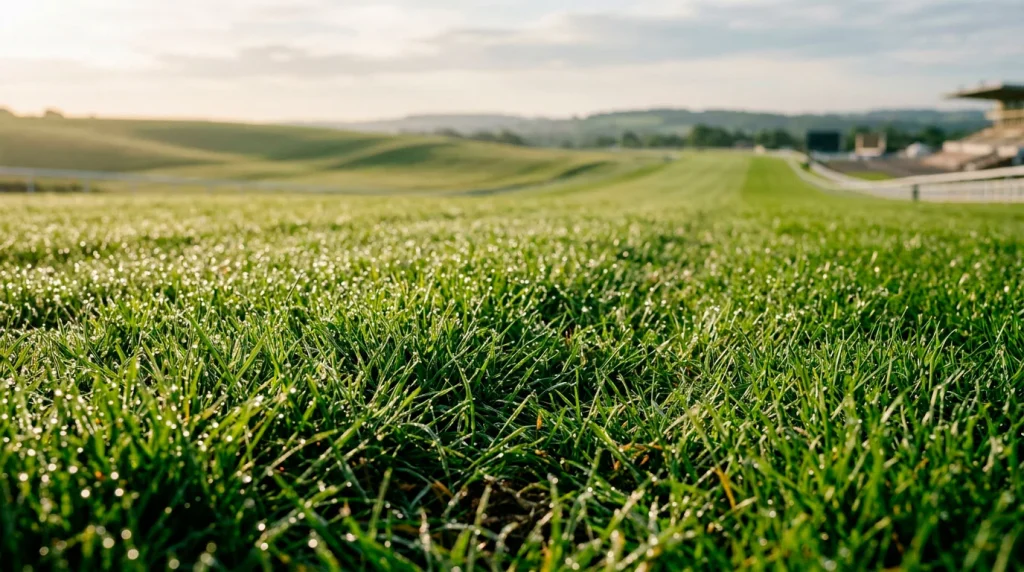
Why Going Matters
Ground conditions shape every aspect of a horse race. The going — the state of the turf — determines how much effort a horse expends with each stride, how easily she can accelerate, and whether stamina or speed proves decisive. At Epsom, where the terrain already tests balance and coordination, the going adds another layer of complexity that punters must factor into their analysis.
The Oaks course record illustrates the impact of fast ground. Love set the mark of 2 minutes 34.06 seconds in 2020 on good to firm going, according to Racing and Sports. That time reflected both her exceptional ability and the speed-favouring surface. On slower ground, even the same filly would have clocked a significantly longer time. The going determines not just who wins but how races unfold.
Different fillies thrive on different surfaces. Some possess the quick action suited to firm ground; others relish the give in softer conditions that allows them to use their power more effectively. Knowing your filly’s preferences, and matching them to the conditions on the day, is fundamental to Oaks betting. A well-fancied runner on unsuitable ground becomes a risky proposition regardless of her trial form.
This guide examines typical June conditions at Epsom, explores how different going descriptions affect fillies’ chances, and explains how to monitor and interpret ground conditions before placing your bet.
Typical June Conditions at Epsom
June in Surrey tends toward dry and warm, producing ground that ranges from good to good to firm at Epsom Downs. The racecourse sits on chalk downland, which drains efficiently and firms up quickly in the absence of rain. Most Oaks renewals take place on going described as good, good to firm, or occasionally firm in exceptionally dry years.
Climate variability introduces uncertainty. A wet spring can leave residual moisture in the ground, softening the surface even if race week is dry. Conversely, a prolonged dry spell can produce firm conditions that some fillies find jarring. The racecourse management team monitors the turf closely, sometimes watering to prevent the ground becoming excessively quick.
Historical patterns offer a rough guide. Over the past two decades, the Oaks has most frequently been run on good to firm or good ground. Soft or heavy conditions are rare but not unknown; a wet Derby weekend transforms the challenge entirely, favouring fillies with proven mudlarking ability over those who need a faster surface to show their speed.
Weather forecasts become essential in the days before the race. A predicted heatwave suggests drying conditions and possibly firm ground; a forecast of showers indicates the going may ease. Punters who track these forecasts can anticipate market adjustments and position their bets accordingly. A filly who loves soft ground but is unlikely to encounter it at Epsom becomes a weaker proposition; one who thrives on fast ground gains an edge if conditions align.
The going report issued on the morning of the race provides the definitive assessment. Treat earlier descriptions as provisional; only the official going on the day tells you exactly what your filly will face.
How Different Going Affects Fillies
On good to firm or firm ground, races tend to unfold at a faster tempo. The surface offers less resistance, allowing horses to maintain speed without excessive effort. Fillies with quick, economical actions thrive in these conditions. They skim across the top of the turf, conserving energy for a finishing kick. Enable ran her Oaks in 2 minutes 34.13 seconds on good ground in 2017, just off Love’s subsequent record, demonstrating what elite fillies can achieve on a fast surface, according to BettingSites.co.
Good ground represents the neutral zone. Most fillies handle it adequately, and form from trials run on similar going transfers reliably. The surface provides enough cushion to protect joints while remaining fast enough for tactical speed to matter. On good ground, class tends to prevail because no filly gains a significant surface advantage.
Soft or heavy ground shifts the balance toward stamina. The extra effort required to extract each foot from yielding turf tires horses more quickly, turning the race into an attritional battle. Fillies who handle cut in the ground, often identifiable by their pedigrees and previous runs on soft surfaces, can outperform their form on faster going. Conversely, speed-oriented fillies who have never encountered soft ground may struggle to sustain their action.
Pedigree offers predictive value. Fillies by sires associated with soft-ground performance, or out of dams who won on heavy, inherit tendencies that shape their going preferences. Physical conformation matters too: horses with round, powerful actions often handle soft ground better than those with long, daisy-cutting strides suited to firm turf.
Trial form on similar going carries more weight than form on contrasting surfaces. A filly who won her Musidora on soft ground is more likely to reproduce that form at Epsom if rain arrives than one whose trial took place on firm going. Matching conditions minimises translation error.
Checking Going Before You Bet
Official going reports are published by the racecourse and updated throughout the meeting. On the morning of Oaks day, check the Epsom Downs website or the BHA’s official channels for the declared going. This is the authoritative description that bookmakers and punters use to assess conditions.
Weather forecasts refine your expectations. Even if the morning going is good, a forecast of heavy afternoon showers could soften the ground by race time. Conversely, sunshine and wind can dry the surface between the early races and the Oaks. Track how conditions evolve across the card by monitoring social media updates from the course or watching earlier races for visual clues.
Going sticks and rail positions provide additional data. The going stick measures ground resistance numerically, offering a more objective assessment than verbal descriptions alone. Rail placements, announced in advance, affect where the ground is freshest and where it may have been worn by earlier runners. A filly drawn on the stands side might encounter different conditions than one racing toward the far rail.
Trainer comments on going preferences are valuable. Listen to pre-race interviews where handlers discuss whether the ground suits their filly. A confident statement that the surface is ideal carries weight; a hedged remark about hoping the ground doesn’t dry out signals a potential vulnerability.
Adjust your bets accordingly. If conditions shift toward your filly’s preference, her value increases. If they move against her, reconsider your stake. Reading the ground correctly can be the difference between a winning bet and a frustrating near-miss.
Responsible Gambling
Ground conditions are one variable among many, and even a perfect surface match does not guarantee success. Weather changes, late scratchings, and race dynamics can undo the best-laid plans. Bet within your limits and accept that uncertainty is inherent to racing. If you find yourself chasing losses or betting impulsively when conditions shift, pause and reassess. Support is available through BeGambleAware. Gambling should enhance your enjoyment of the sport, not create stress.
Ground Conditions Impact on Oaks — More on this topic at epsom oaks betting.
See also Oaks Pedigree Analysis.
