
Tattenham Corner Betting Tactics
 Available in US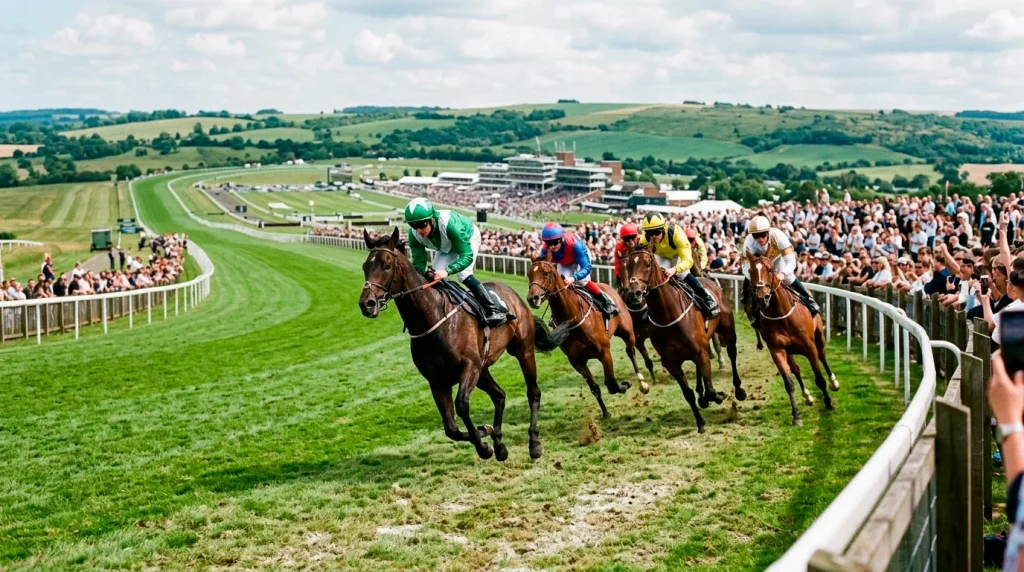
The Corner That Defines Epsom
Tattenham Corner is not merely a bend in the track; it is the pivot around which the Oaks and Derby revolve. This sweeping left-handed turn, descending sharply as it curls toward the home straight, separates horses who can handle Epsom from those who cannot. The combination of gradient, camber, and pace creates a decisive moment roughly three furlongs from the finish. What happens here often determines the outcome.
For bettors, Tattenham Corner is where theory meets reality. A filly who looks balanced in her homework might become unbalanced under race pressure. Another who seemed outpaced early can seize ground on the bend if she handles the terrain. Draw bias data from FlatStats shows that runners from low stalls (positions 1 and 2) return an Actual versus Expected ratio of just 0.58 in Group 1 races over twelve furlongs at Epsom — a significant underperformance that reflects the challenge of navigating the camber from the inside.
Understanding the corner helps you interpret form and anticipate how a race might unfold. A filly with previous experience at Epsom, or on similarly undulating tracks, carries an advantage that the market sometimes undervalues. This guide examines the track geometry, how horses respond to the turn, and how punters can incorporate that knowledge into their betting.
Track Geometry and Gradient
Epsom Downs rises from the start before descending sharply as the field approaches Tattenham Corner. The drop is pronounced: the track falls roughly 140 feet from its highest point to the finish line, with much of that descent concentrated around the corner and into the straight. Horses accelerate downhill, and the gradient pulls them toward the inside rail as they round the bend.
The camber adds complexity. A camber is a lateral slope that banks the track, and at Tattenham Corner the camber tilts away from the inside rail rather than toward it. This counterintuitive design means horses on the inner are running on lower ground, pushed outward by centrifugal force while the track itself offers no banking to hold them in. The effect can unbalance less agile runners, causing them to drift wide or lose momentum through the turn.
The corner is not a simple arc. It tightens as the field exits, demanding that jockeys adjust their line continuously. A rider who commits to the rail early may find the ground working against them; one who swings wide loses valuable distance. The ideal line is fluid, requiring horsemanship and a mount willing to respond under pressure.
This geometry rewards certain running styles. Hold-up horses who travel within themselves before quickening off the bend can use the downhill momentum to surge past rivals. Front-runners who have set a strong pace face the risk of tiring on the ascent to the finish if they have burned too much energy holding position through the turn. Every tactical decision before the corner shapes what is possible after it.
How Horses Handle the Turn
Balance is the key attribute for negotiating Tattenham Corner. A filly who carries her head level, shifts weight smoothly from stride to stride, and responds to subtle rein adjustments can maintain rhythm through the turn. One who runs with a high head carriage, fights for her head, or changes legs awkwardly may lose lengths without any rival passing her. The corner punishes mechanical imperfection.
Draw statistics illuminate the challenge. According to FlatStats analysis of Group 1 races at twelve furlongs, runners from stalls 1 and 2 post a strike rate of just 5 percent, compared to 8 to 9 percent for middle and high draws. The low-draw disadvantage stems partly from the early positioning that forces those runners to navigate the worst of the camber. A filly breaking from stall 1 who does not possess the speed to cross the field early is likely to spend the critical phase of the race on ground that works against her.
Experience matters. A filly who has raced at Epsom before, or on tracks with similar undulations such as Sandown or Brighton, arrives with an understanding of the terrain. First-time visitors often require a patient ride while they adjust to the unique sensations. Trainers sometimes prepare horses with gallops on similar ground, but nothing fully replicates the pressure of the corner during a Classic. Watch for comments in paddock previews about whether a filly has handled undulating gallops in training.
Jockey skill amplifies or mitigates a horse’s natural handling. An experienced Epsom jockey knows when to sit still and when to ask for effort, reads the pace of rivals around the turn, and positions their mount to strike as the home straight opens. A less experienced rider might panic at the corner’s demands, overcompensating and unsettling the horse at exactly the wrong moment.
In-Running Betting Angles
In-running betting on the Oaks offers opportunities around Tattenham Corner. Prices fluctuate rapidly as the field descends, and punters who can read the race in real time can find value. A filly travelling strongly on the bridle as she enters the turn may be available at longer odds than her position warrants because the algorithms have not yet registered her momentum. Conversely, a tiring leader whose stride is shortening through the bend may still be trading at short prices until the visual evidence becomes unmistakable.
Timing is critical. The window between entering the corner and straightening for home lasts only seconds. If you identify a filly handling the ground well while rivals struggle, you must act immediately. By the time the field is halfway up the straight, the market has usually corrected. In-running betting on Epsom races rewards preparation: know your fancies, understand how they handle turning tracks, and watch for signs of distress or fluency as the corner approaches.
Jim Allen, General Manager of Epsom Downs Racecourse, noted the continued appeal of the meeting: “It’s fantastic to see the World Pool turnover figures up on last year, with the biggest Derby field since 2017.” That engagement reflects the global fascination with Epsom’s unique challenges. For in-running bettors, the drama of Tattenham Corner is where preparation meets opportunity, and where reading the race accurately can yield returns unavailable before the off.
Risk remains elevated. In-running betting requires quick decisions under pressure, and misjudging the terrain can lead to rapid losses. Approach with discipline and predefined stake limits.
Responsible Gambling
In-running betting accelerates decision-making and can intensify emotional responses. The speed at which prices move around Tattenham Corner can encourage impulsive wagers. Set strict limits before the race begins and do not exceed them regardless of how the action unfolds. If the pressure of live betting becomes stressful rather than enjoyable, consider stepping back to pre-race markets. Support is available through BeGambleAware if gambling feels out of control.
Tattenham Corner Betting Tactics — More on this topic at epsom oaks betting.
See also Oaks Favourite Performance Analysis.
